



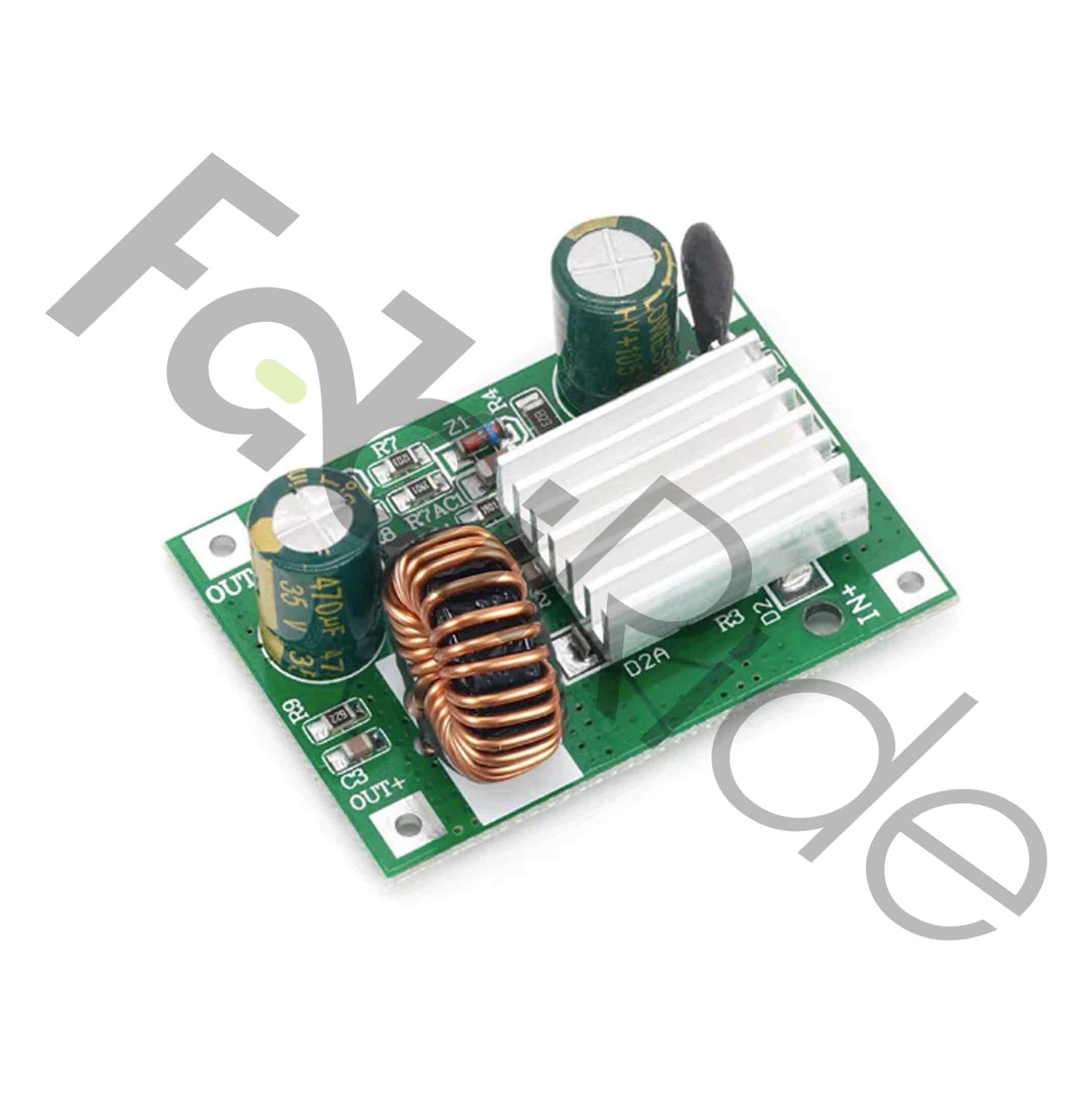
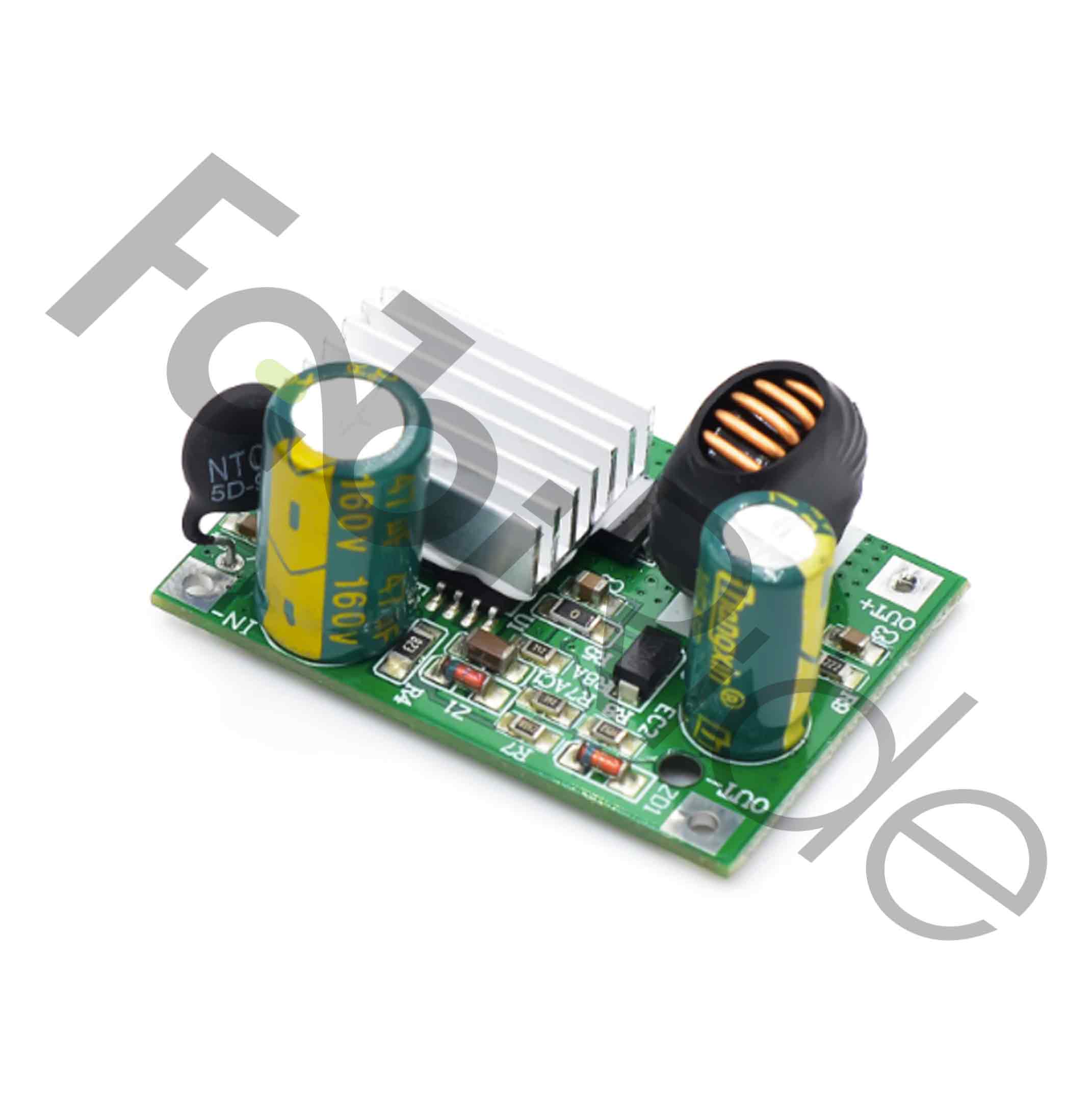
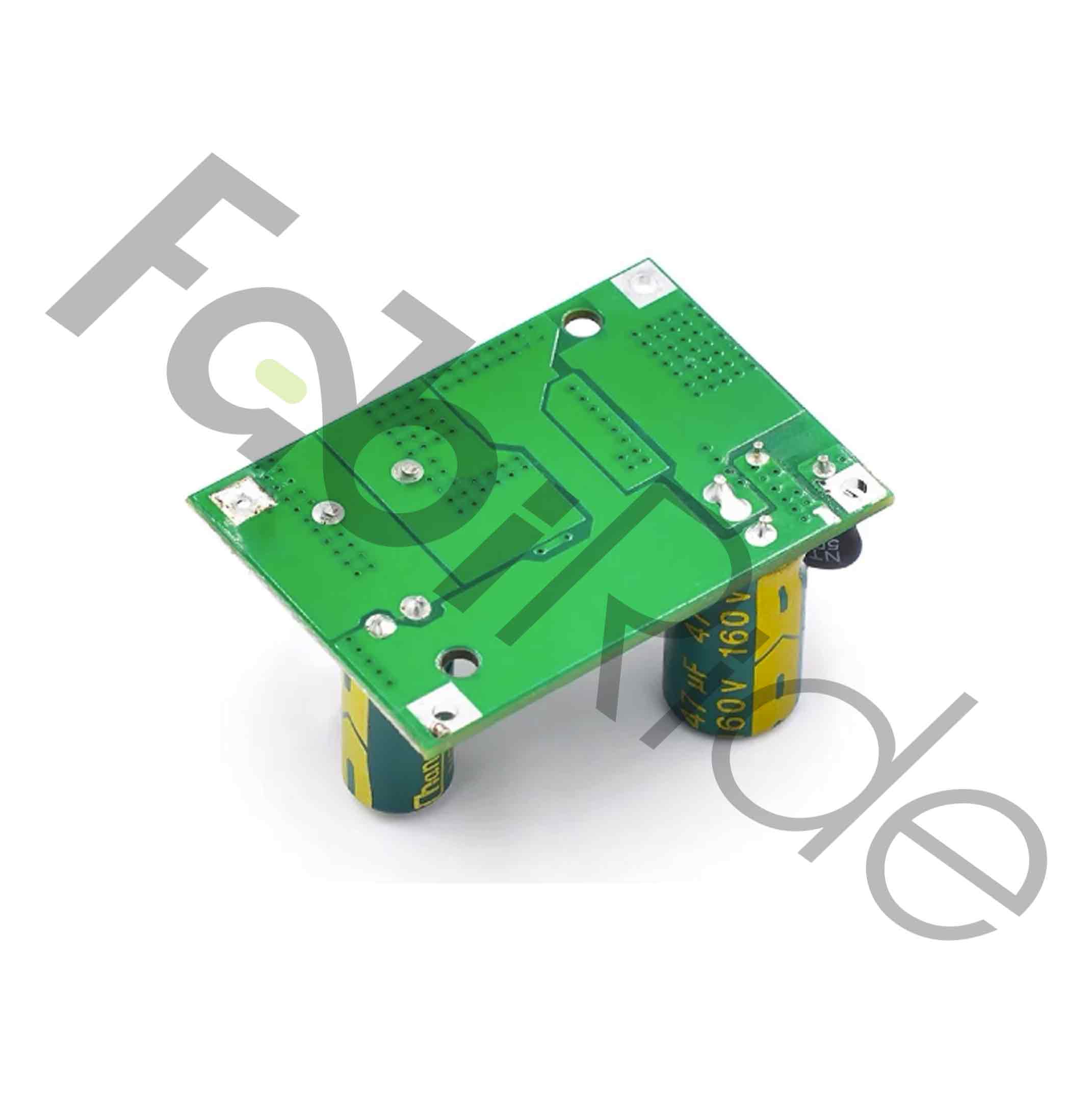
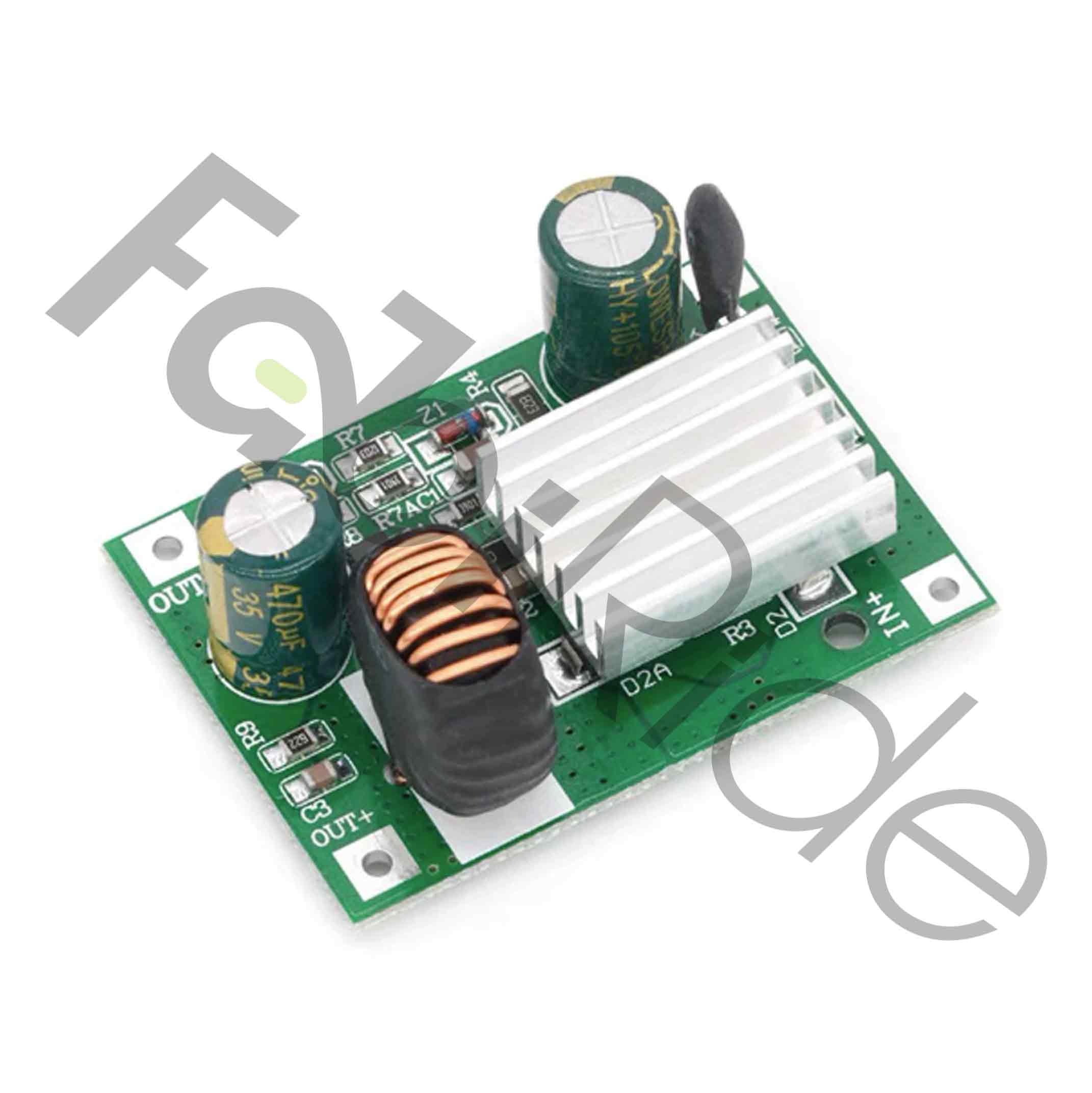
The 20V-90V to 12V 3A DC-DC converter is a step-down (buck) module built for electric bikes, electric scooters and electric motorcycles. It takes any battery voltage between 20 V and 90 V DC and delivers a regulated 12 V DC output. Maximum output current is 3 A, which equals roughly 36 W of available power.
The module works with 24 V, 36 V, 42 V, 48 V, 52 V, 60 V, 72 V and 84 V systems. That range covers almost every e-mobility battery pack on the road today. Because it is manufacturer-independent, it connects to any controller and battery within that window.
This converter creates a dedicated 12 V line for accessories your traction battery cannot feed directly. Typical loads include 12 V headlights, a horn, relays, GPS modules, cameras, dash cameras and USB modules. As a result, one small module replaces a separate 12 V battery on the vehicle. The compact housing fits under a frame cover or beside the controller. Output voltage is fixed at 12 V and is not adjustable. This standard version is intended for dry, ordinary operating conditions.
Key Benefits
- Wide 20-90 V DC input range – covers nearly every e-mobility battery system in one module.
- Regulated 12 V output – accessories receive steady power regardless of the battery charge level.
- 3 A output current – total 12 V load can reach approximately 36 W.
- 72 V (20s) compatibility – a fully charged 20s lithium-ion pack reaches around 84 V and stays inside the working range.
- Compact housing – mounts in tight spaces, under plastic covers or alongside the wiring harness.
- Versatile use – powers LED lighting, relay coils and low-power control circuits alike.
- Simple terminals – +12 V / GND output and +Vin / GND input, clearly marked.
- One module, three vehicle types – suits e-bikes, scooters and electric motorcycles equally.
Who Is This Converter For?
This converter suits electric bikes, electric scooters and electric motorcycles running 24 V, 36 V, 42 V, 48 V, 52 V, 60 V, 72 V or 84 V battery packs. Since the module is brand-independent, it connects to any system inside that voltage window. Riders upgrading from a 48 V pack to a 72 V pack keep the same converter.
In lighting applications, it powers 12 V LED headlights and LED strips. Keep the combined draw below 36 W and the output stays stable. For electronics, it feeds GPS trackers, cameras, dash cameras and other low-power 12 V devices. In control circuits, it supplies 12 V relay coils, horns and switches.
The product is aimed at people who install accessories themselves. Workshops, battery builders and riders upgrading their own vehicle all fall into that group. If you need high resistance to water and dust, choose the IP67 model instead.
Technical Specifications
| Type | DC-DC converter (buck / step-down) |
| Input voltage | 20-90 V DC |
| Supported systems | 24 / 36 / 42 / 48 / 52 / 60 / 72 / 84 V |
| Output voltage | 12 V DC (regulated, fixed) |
| Max. output current | 3 A |
| Max. power | ~36 W |
| Connections | +12 V / GND output, +Vin / GND terminals |
| Housing | Compact, mounts in confined spaces |
| Operating environment | Dry / ordinary conditions |
| Recommended fuse | 2-3 A on the input line |
| Intended use | E-bikes, electric scooters, electric motorcycles |
Installation Tips
- Place the input fuse as close to the battery as possible; a 2-3 A inline fuse works well.
- Observe polarity strictly when connecting +Vin and ground (GND).
- Choose a wire cross-section that matches your planned load.
- Mount the module so that heat can dissipate freely.
- For sensitive devices, add a fuse and filtering on the 12 V line as well.
Why Choose This 20V-90V to 12V 3A Converter?
The main difference from narrower modules is the 20-90 V input range. A single unit covers eight different system voltages. Therefore you do not need to swap converters when moving from a 48 V battery to a 72 V one.
Second, this is a voltage regulator rather than a charger. It supplies a constant 12 V in real time instead of charging a separate battery. Consequently accessories work immediately, without waiting for a secondary pack to build up charge. That also removes the weight and maintenance of a second battery.
Third, the compact housing matters on crowded frames. Scooter decks and motorcycle frames rarely leave room for bulky electronics. This module tucks under a cover or sits next to the controller, close to the harness it feeds.
Frequently Asked Questions
Will this converter work with my 72 V e-bike battery?
- Yes. A 72 V (20s) lithium-ion pack peaks near 84 V when fully charged.
- That figure sits comfortably inside the 20-90 V input range.
Does it fit electric scooters and electric motorcycles too?
- Yes. The module is designed for e-bikes, electric scooters and electric motorcycles.
- Any pack from 24 V up to 84 V is supported.
Can I adjust the output voltage?
- No. The output is fixed at a regulated 12 V DC.
- There is no trimmer or adjustment potentiometer on the module.
How many accessories can I run at once?
- The total 12 V load must stay within 3 A, or about 36 W.
- Lights, a horn, a camera and a GPS tracker usually fit inside that budget.
What fuse should I use?
- A 2-3 A inline fuse on the input line is recommended.
- Fit it as close to the battery terminal as your wiring allows.
Can I use it outdoors in the rain?
- This standard version is rated for dry, ordinary operating conditions.
- For wet or dusty environments, select the IP67 version instead.
Does it replace a separate 12 V battery?
- Yes. It draws from the main pack and outputs 12 V continuously.
- No second battery, charger or extra mounting bracket is needed.
Which connections does it use?
- Input: +Vin and GND terminals from the traction battery.
- Output: +12 V and GND to your accessory or fuse block.
One converter, eight system voltages and a steady 12 V line for every accessory on your build. Whether you are wiring headlights on an e-bike, a horn and relay on a scooter, or a dash camera on an electric motorcycle, this module handles the job in a package small enough to hide under the frame cover.


There are no reviews yet.