



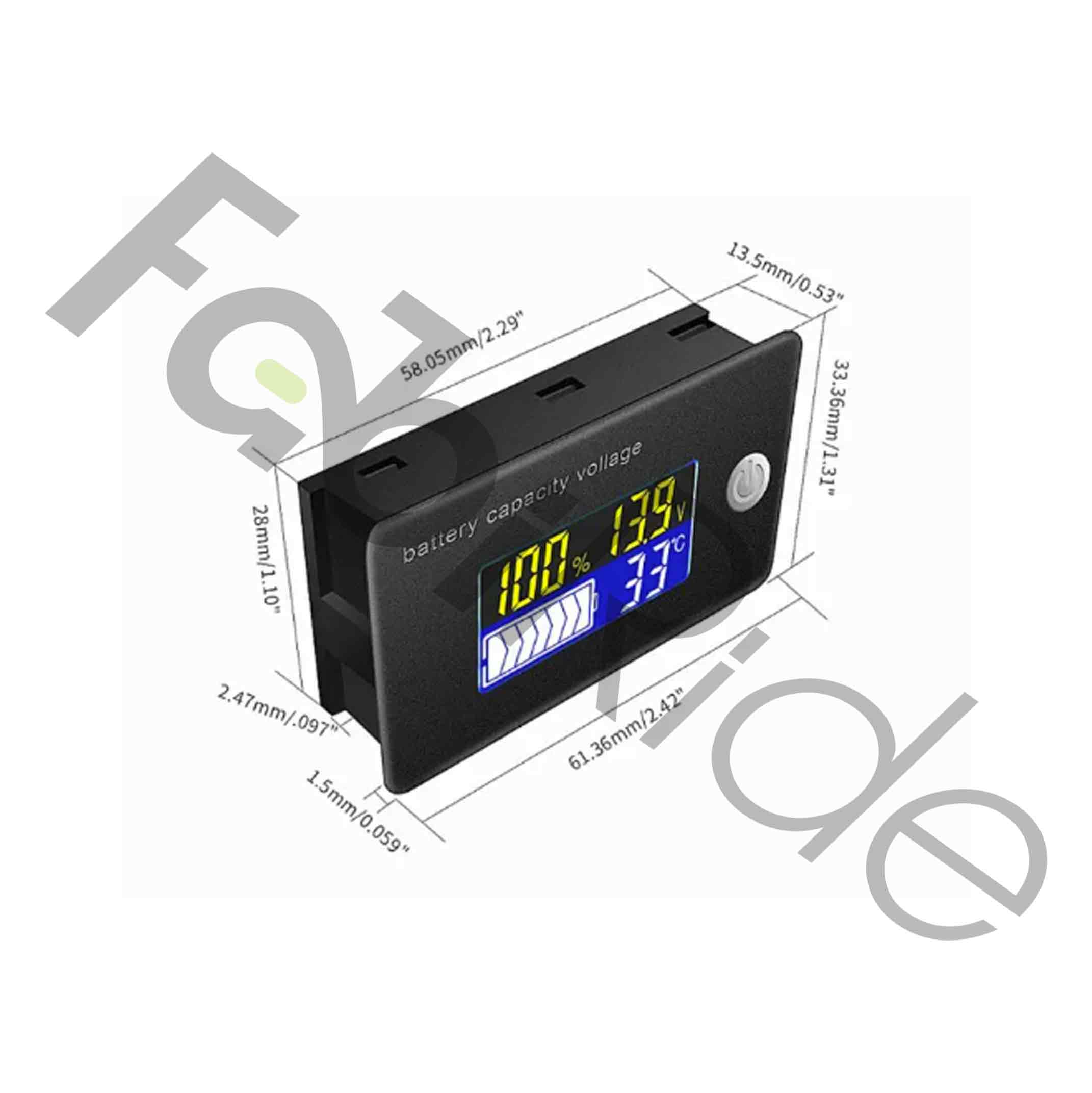
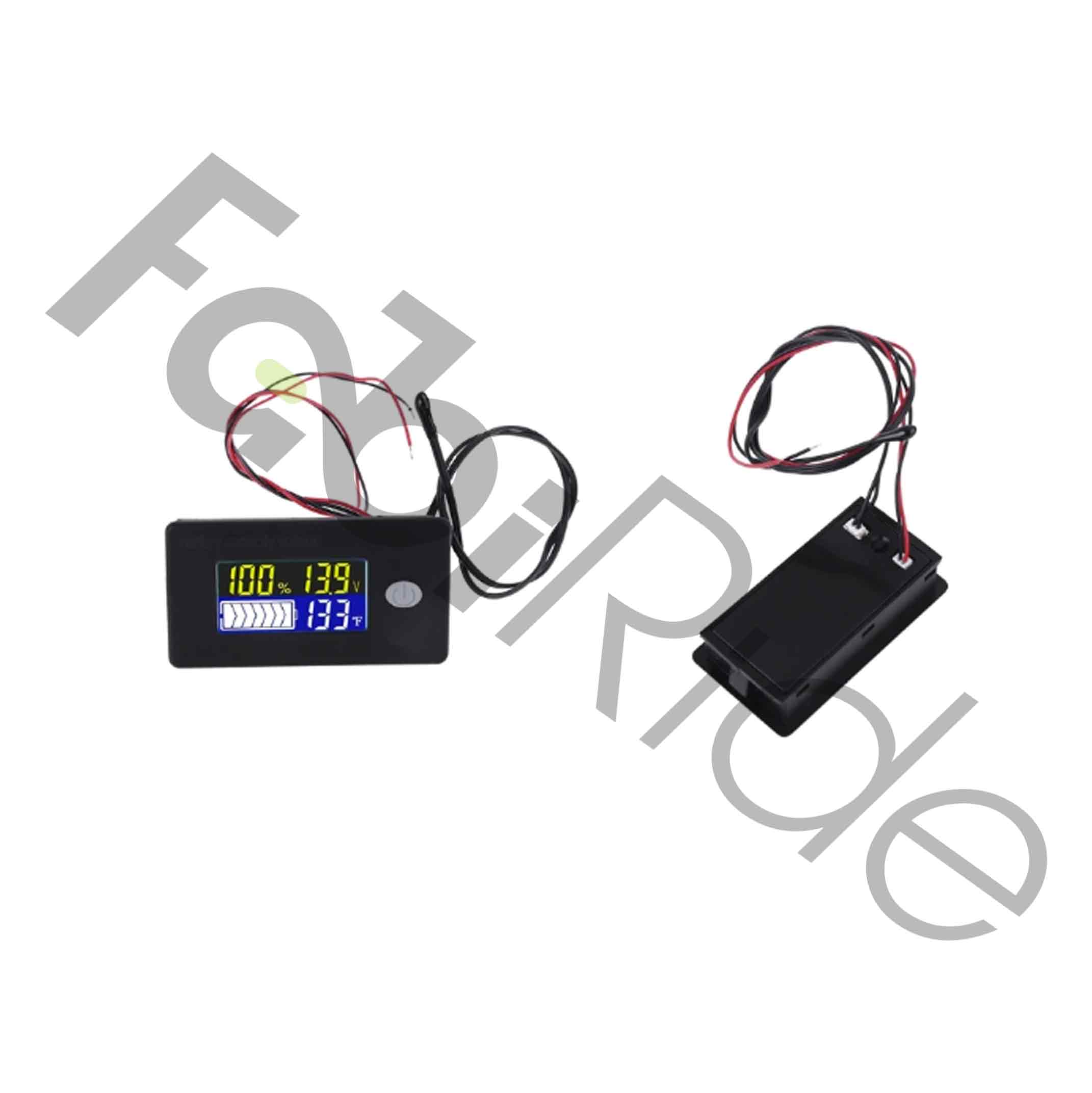
This digital voltmeter 10V-100V DC is a compact panel meter built for electric bikes, electric scooters and electric motorcycles. It also suits battery systems, motor controllers and DIY builds. The module shows real-time DC voltage on a clear digital display, in volts.
One unit covers 12V, 24V, 36V, 48V, 60V, 72V and 84V class systems. Because of that wide span, the same indicator works on a 36V commuter e-bike and on a 72V or 84V electric motorcycle. There is no need to stock several narrower meters.
Wiring is simple. This is a two-wire DC panel voltmeter, so it draws power directly from the circuit it measures. No separate supply line is required. You can connect it to a battery pack, to a controller measurement point, or to a power circuit.
Key Benefits
- Wide 10-100V DC range – a single module spans 12V through 84V class systems.
- Clear digital readout – figures stay legible in the workshop and outdoors.
- Two-wire connection – the meter is powered by the measured circuit itself.
- Fast installation – hook it to the power circuit or to a controller measurement point.
- Voltage sag monitoring – watch how voltage drops while the pack is under load.
- Battery state checks – judge pack charge level from the live voltage figure.
- Dual mounting options – flush-fit into a dashboard or run it as a wired indicator.
- Compact housing – fits the tight dash space of a scooter or e-motorcycle.
Who Is This For?
This voltage indicator is aimed at owners and builders of electric bikes, electric scooters and electric motorcycles. It is equally at home in battery systems and beside motor controllers. The supported range covers 12V, 24V, 36V, 48V, 60V, 72V and 84V class packs.
Builders who assemble battery packs will find it useful. A permanent voltage figure tells you where the pack stands at any moment. Likewise, DIY projects benefit when quick, readable indication matters more than laboratory-grade accuracy.
The meter also earns its place during diagnostics. Connect it to a controller measurement point and you see the real voltage during acceleration. As a result, it becomes easier to tell whether sag comes from the battery or from the wiring.
Technical Specifications
| Product type | Digital voltage indicator (panel voltmeter) |
| Measuring voltage | 10-100V DC |
| Current type | Direct current (DC) only |
| Readout | Digital display, voltage in volts (V) |
| Supported systems | 12V / 24V / 36V / 48V / 60V / 72V / 84V class |
| Power supply | From the measured circuit (two-wire connection) |
| Connection | Plus (+) and minus (-), correct polarity required |
| Mounting | Dashboard integration or wired indicator |
| Applications | E-bikes, scooters, electric motorcycles, battery systems, controllers, DIY projects |
Installation Tips
- Observe polarity: the red wire is plus (+), the black wire is minus (-).
- Connect the module straight to the measured circuit or via a controller measurement point.
- Avoid long, unshielded leads in electrically noisy surroundings.
- Use an adequate wire cross-section for the run.
- Add a fuse and input filtering with a capacitor if interference appears.
- Check the voltage of a fully charged pack first, so it stays under 100V.
Why Choose This Voltage Indicator?
The main difference is coverage. One broad-range module replaces several narrower meters, since the 10-100V span reaches from small commuter packs to high-voltage builds. Consequently, the same part can serve more than one machine in your garage.
Wiring is the second advantage. Two wires carry both the measurement and the supply, which keeps the loom shorter than on modules needing a third power lead. That matters in cramped scooter and e-motorcycle dashboards.
Finally, the reading is instantaneous. Unlike percentage-style charge bars, this module reports actual voltage in volts. Therefore you see genuine electrical behaviour rather than an estimated fuel-gauge figure.
Frequently Asked Questions
Will this voltmeter work on my 72V or 84V electric motorcycle?
- Yes. The 10-100V DC range covers both 72V and 84V class systems.
- Check the fully charged pack voltage first and keep it below 100V.
Can I fit it to a 36V or 48V e-bike and scooter?
- Yes. The same module handles 12V, 24V, 36V and 48V class packs.
- No range switching or reconfiguration is needed.
Does it need a separate power supply?
- No. It is a two-wire meter powered by the circuit under measurement.
- That keeps installation simpler than three-wire alternatives.
Does it measure AC voltage?
- No. This module reads direct current voltage only.
- Connect it to battery packs, controllers or DC power circuits.
How do I wire it correctly?
- Red goes to plus (+) and black goes to minus (-).
- Correct polarity is mandatory for a valid reading.
Can I see voltage sag under load?
- Yes. The display updates in real time as current is drawn.
- Wire it to a controller measurement point for acceleration testing.
How is it mounted?
- Either flush into a dashboard panel or left as a wired indicator.
- The compact body suits narrow scooter and e-motorcycle dash cutouts.
Does it show charge percentage?
- No. It reports actual voltage in volts instead of an estimated percentage.
- You interpret pack state from that voltage figure.
For riders and builders who want a permanent voltage figure on the handlebars or bench, this 10-100V DC panel meter is a straightforward answer. It reads 12V through 84V class systems, wires with two leads, and shows live volts during load. Consequently, one part covers e-bikes, scooters, electric motorcycles and battery projects alike.

There are no reviews yet.