



An electric bike is a modern vehicle that combines the simplicity of a traditional bicycle with the power of an electric motor. One of the most important questions for current and future e-bike owners is how far they can go on a single charge. Whether you plan to commute every day or enjoy long weekend trips, knowing how many kilometres you can ride without recharging becomes a key factor in the decision.
Although manufacturers often advertise impressive figures, in reality the range depends on many factors. In this article we will look in detail at which elements determine an e-bike’s range, share practical comparisons of different models, and give advice on how to get the most distance out of your bike.
What determines an electric bike’s range?
An e-bike’s range does not depend only on the battery specifications. It is a complex set of factors that can dramatically change how far you get on a single charge.
The main factors affecting e-bike range
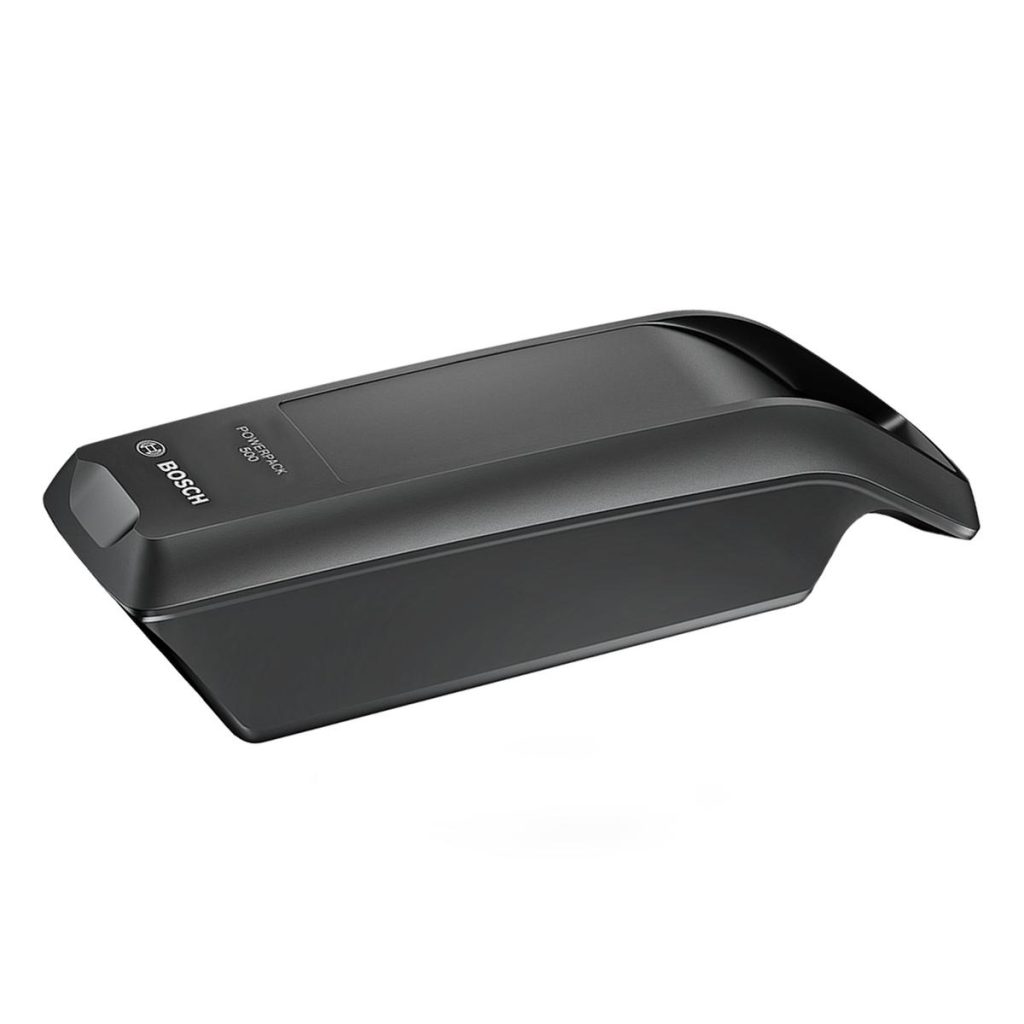
- Battery capacity: battery capacity is measured in watt hours (Wh). The higher this number, the longer the distance you can potentially ride. Modern e-bikes are usually fitted with 300-750 Wh batteries.
- Battery voltage: the usual voltage ranges from 24V to 48V. Higher voltage often means more power, but not always a longer range.
- Motor power: most e-bikes have motors rated at 250-750W. More powerful motors use more energy, especially when riding uphill.
- Assist level: each assist mode (low, medium, high) affects range differently. The maximum assist mode can shorten the range by up to 50%.
- Rider weight and load: a heavier rider or extra cargo takes more energy to move.
- Terrain and route: riding in hilly terrain takes much more energy than riding on a flat surface.
- Weather conditions: a headwind, low temperatures or high humidity reduce an e-bike’s efficiency.
- Tyre pressure: properly inflated tyres can improve efficiency by up to 10%.
In real life these factors work together. For example, riding in a city on a relatively flat surface, with minimal assist and ideal weather, you can expect a considerably longer range than on a demanding mountain route in maximum assist mode.
Practical examples: the range of different e-bikes
When comparing different e-bike models, you can see significant differences in how far they can go on a single charge. These differences come from technological choices, construction and intended use.
City vs. mountain electric bikes: which has the longer range?
City e-bikes usually have a longer range than mountain bikes or bikes with thicker tyres. The main difference lies in the construction and the intended use:
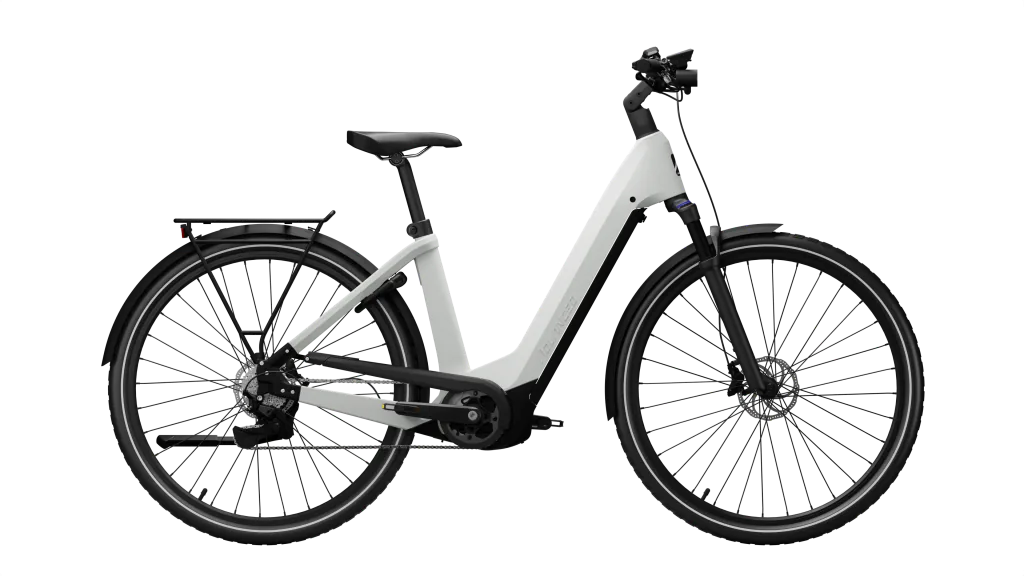
- City e-bikes often have optimal thinner profile tyres and an ergonomic seating position, and are designed for riding on paved roads. They are usually fitted with 300-500 Wh batteries and can cover 50-90 km under moderate intensity.
- Mountain e-bikes have more powerful motors, higher resistance tyres and are built for more demanding riding. Their batteries are often larger (500-750 Wh), but because of the higher energy consumption the range usually reaches 40-70 km.
- Wide tyre e-bikes (“fat bikes”) offer better stability and off-road ability, but because of the higher resistance their range can be even lower, often reaching 30-60 km.
Interestingly, some premium city e-bikes with high capacity batteries and optimised electronics can boast an outstanding range of 100+ km, while the most powerful mountain e-bikes rarely exceed 80 km even in ideal conditions.
Below is a practical comparison table of different models:
| E-bike type | Average battery capacity | Average range | Maximum range in optimal conditions |
|---|---|---|---|
| City hybrid | 400-500 Wh | 60-80 km | 100+ km |
| Sport city | 300-450 Wh | 50-70 km | 90 km |
| Mountain (MTB) | 500-750 Wh | 40-70 km | 80 km |
| Wide tyre | 500-750 Wh | 30-60 km | 70 km |
| Folding | 250-400 Wh | 40-60 km | 70 km |
It is important to note that the ranges advertised by manufacturers are often more optimistic than real ones. For example, a manufacturer may state that their bike covers 90 km, but that figure may only be reached in ideal conditions: on a flat surface, in minimal assist mode, with no wind and with an optimal rider weight of 70 kg.
How to increase your electric bike’s range?
Whatever e-bike you have, there are effective ways to extend its range. These strategies include both everyday habits and technical changes.
Maintenance and riding tips for a longer range
- Smart use of assist modes: use a lower assist mode on flat ground and save the higher mode for climbs. Such a minimal choice can double the range.
- Regular pedalling: try to pedal regularly, even when the electric assist mode is switched on. Steady pedalling takes less energy from the battery.
- Tyre care: maintain the optimal tyre pressure, which is usually stated on the tyre itself. Too low a pressure increases resistance and shortens the range.
- Optimal battery care:
- Avoid fully discharging the battery
- Charge the battery regularly, even if you are not using the bike
- Keep the battery at room temperature when not in use
- Avoid long-term storage in a fully charged state
- Steady speed: ride at a constant speed and avoid sudden accelerations and braking, which waste energy.
- Bike weight: reduce unnecessary weight and carry only the essentials.
- Route planning: choose a flatter route if possible. Avoid steep climbs or sections with high resistance (e.g. gravel roads).
- Chain care: lubricate the chain regularly to reduce mechanical resistance.
Some cyclists carry a spare battery for longer trips, but that is extra weight. It is better to learn to use the energy you have efficiently, especially if your trips are not very long.
Technical changes and upgrades for a longer range
If you want to increase your e-bike’s range even further, you can consider the following technical changes:
- Battery upgrade: many manufacturers offer higher capacity batteries. Before buying, make sure it is compatible with your model.
- Programming an eco mode: some e-bikes let you reprogram the assist modes, creating an even more efficient “eco” mode.
- More efficient tyres: investing in high quality, low resistance tyres can significantly increase your range.
- Improving aerodynamics: some accessories, such as streamlined luggage racks instead of traditional panniers, can reduce air resistance.
Realistic expectations: what to expect from your e-bike?
Setting realistic expectations is important to avoid disappointment with your electric bike’s capabilities. Here are some guideline figures you can go by:
- Economy city class (250-350 Wh): usually 30-50 km
- Mid-range city e-bike (350-500 Wh): about 40-70 km
- High-end city e-bike (500+ Wh): 60-100+ km
- Mid-range mountain e-bike (400-600 Wh): 35-60 km in demanding terrain
- Premium mountain e-bike (600+ Wh): 50-80 km in demanding terrain
Remember that these figures can drop by 30-50% in unfavourable conditions (cold, strong wind, heavy load, maximum assist). They can also increase by 10-30% when riding optimally (tailwind, economical riding, minimal use of assist).
Seasonality and e-bike range
An e-bike’s range can differ significantly in different seasons. In Lithuania’s climate this is especially relevant:
- In summer (20-30°C): the range is usually optimal, matching the manufacturer’s figures
- In spring/autumn (5-15°C): the range may drop by 10-20% because of the lower temperature
- In winter (below 5°C): the range may drop by 30-50%, especially when the temperature falls below zero
In the cold season it is worth considering extra battery insulation, keeping it in a warm place until you set off, and charging it at room temperature.
This will help maintain better battery performance and a longer range.
Summary
An electric bike’s range on a single charge depends on many factors, from battery capacity, e-bike type and rider behaviour to weather conditions and the nature of the route. On average you can expect to cover 40-80 km, but by optimising your riding habits and choosing the right model, this distance can reach 100 km or more.
The most important thing to understand is that the ranges advertised by manufacturers often reflect results achieved in ideal conditions. In reality, for everyday use you should count on 70-80% of the stated distance. However, by following the tips given and looking after your e-bike well, you can significantly improve its efficiency and enjoy longer trips without recharging.
Frequently asked questions (FAQ)
How many kilometres does an electric bike usually go on a single charge?
Most electric bikes can cover an average of 40-120 km on a single charge. In favourable conditions this distance can be even greater, but the real range depends on the rider, the terrain and the battery size.
Which factors reduce an e-bike’s range the most?
The biggest negative impact on range comes from a high assist mode, hilly terrain, heavy weight, low temperatures and under-inflated tyres.
How can I extend the life of an electric bike battery?
Follow proper charging cycles, store the battery correctly, avoid exposure to extreme temperatures and, when possible, use a lower assist level.
Is it possible to upgrade an e-bike battery to increase its range?
Some bikes support a battery upgrade, but before buying you must check compatibility, warranty terms and safety aspects.
Does speed affect the distance I can ride on an e-bike?
Yes, riding at a higher speed usually reduces the range because of higher energy consumption.
