



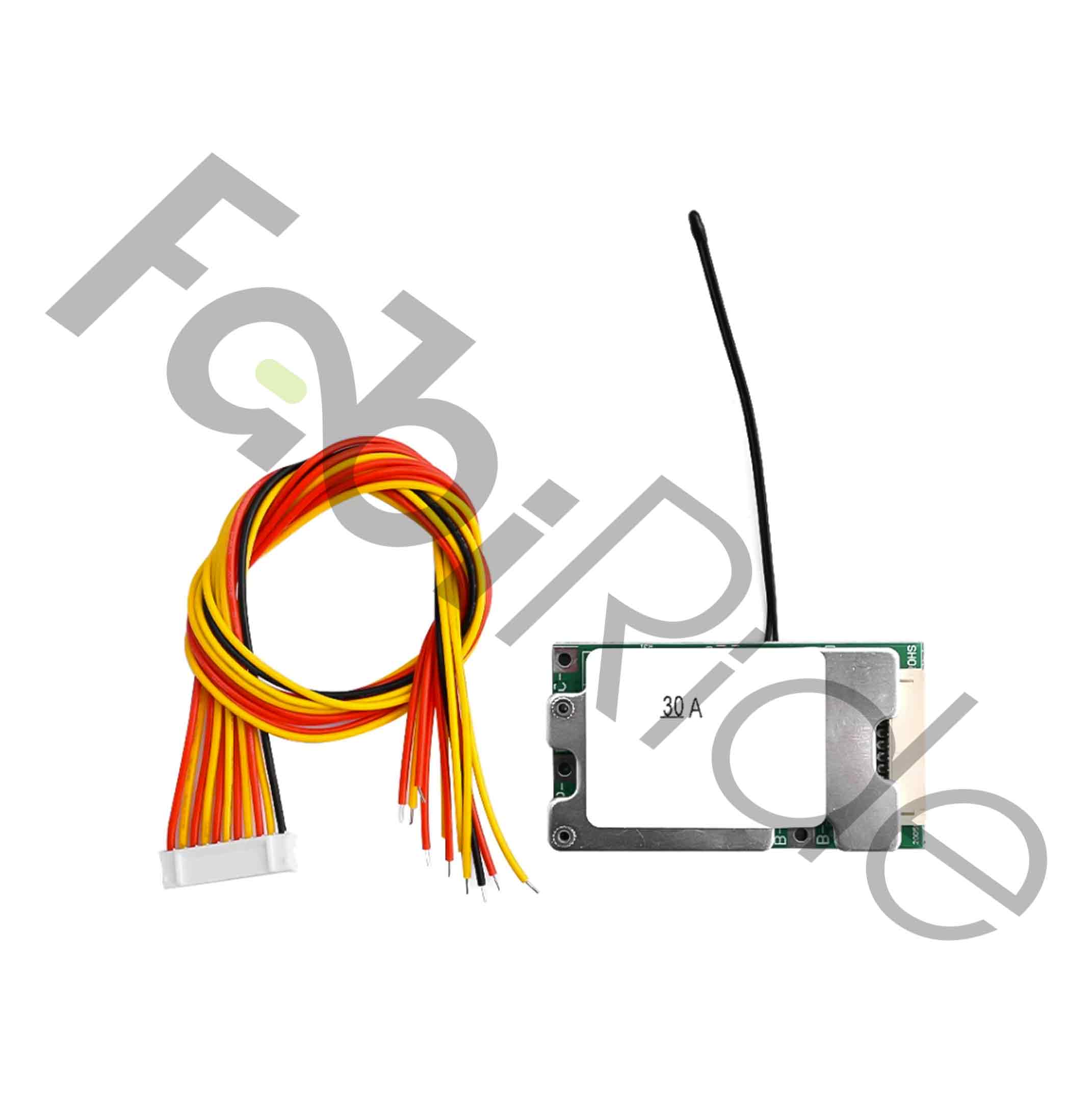
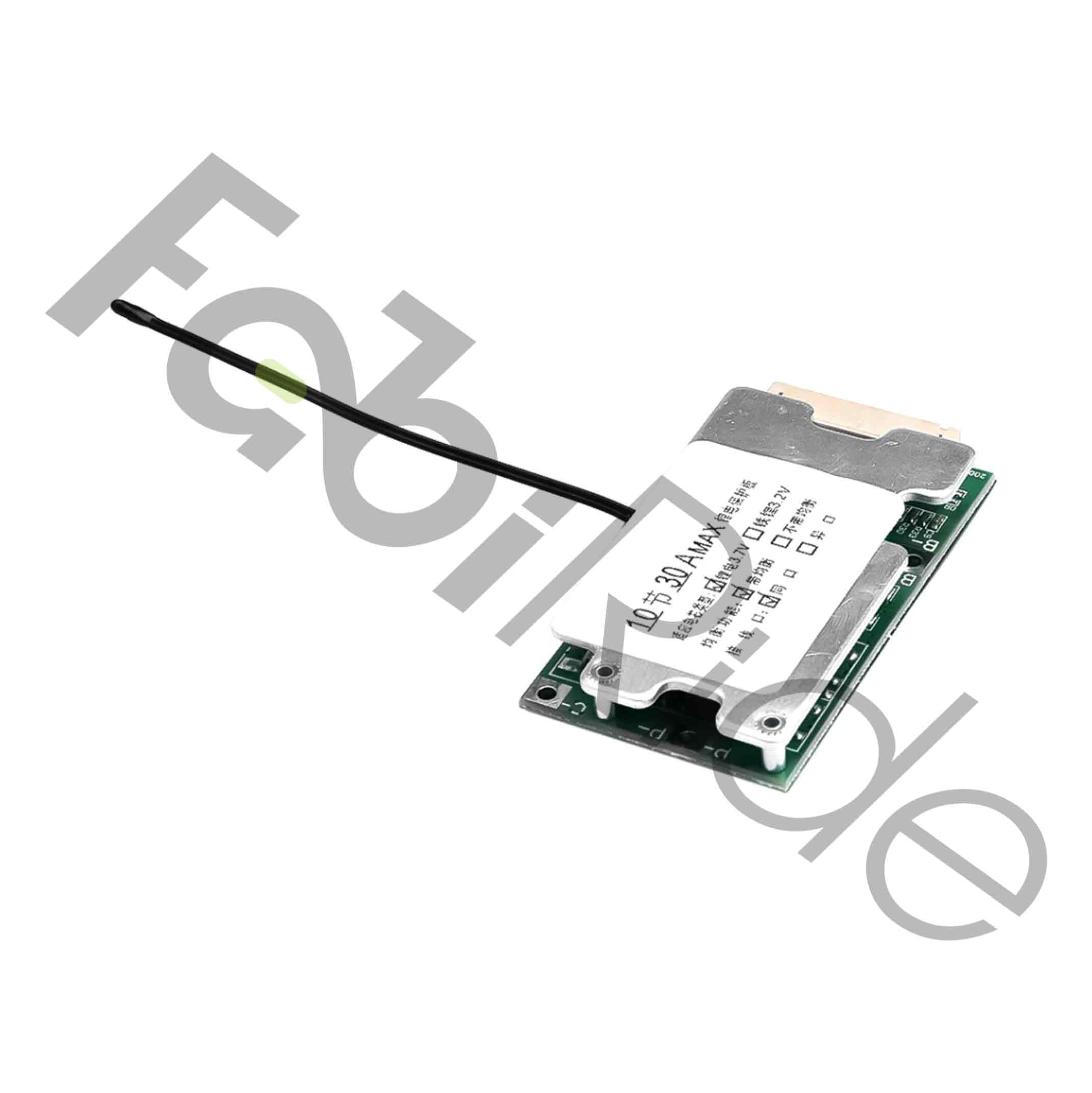
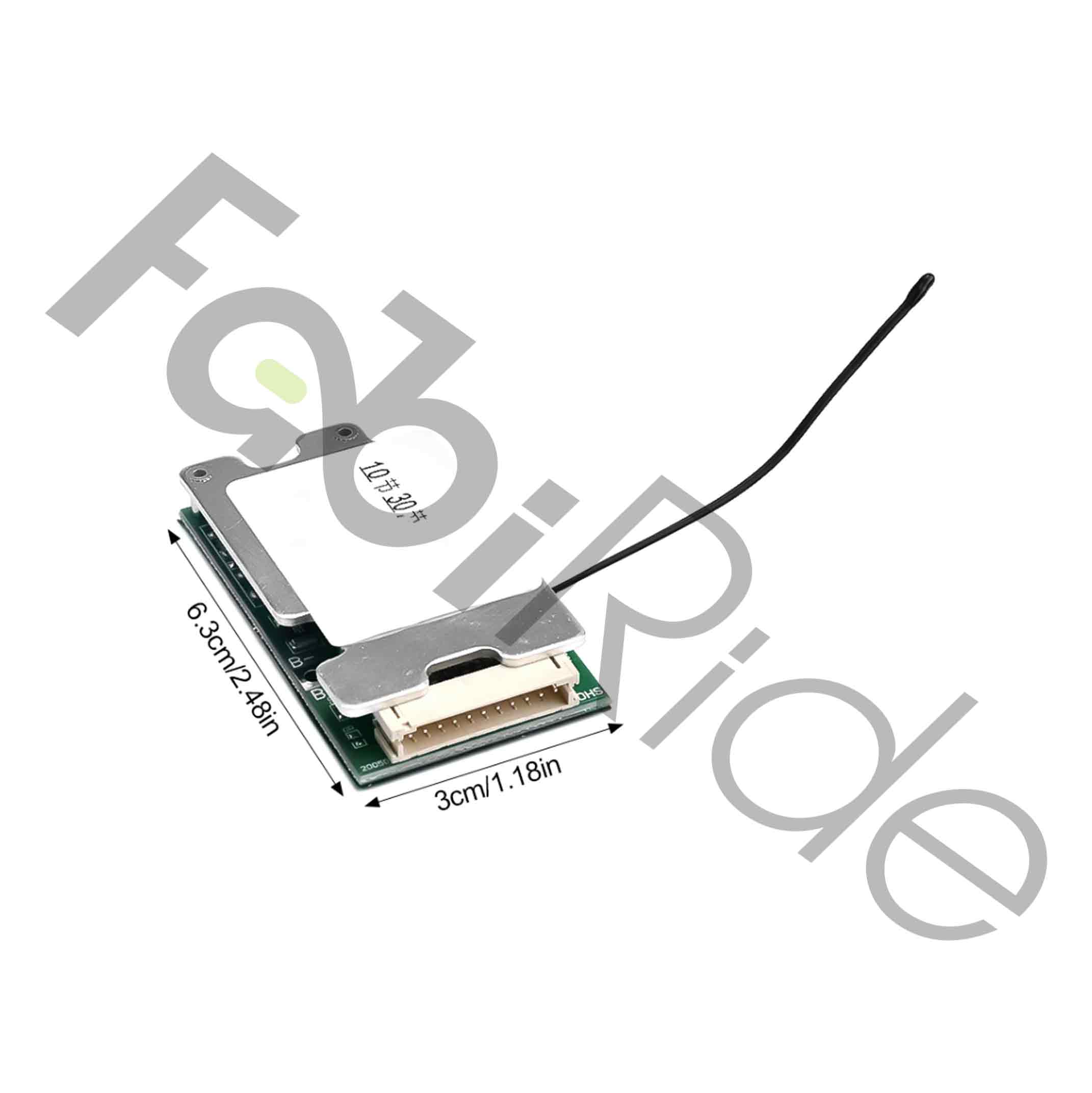
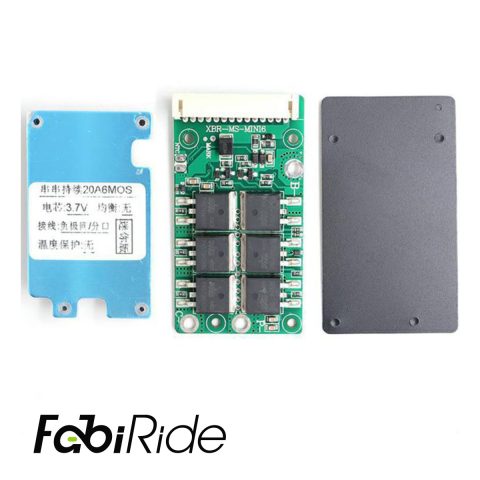
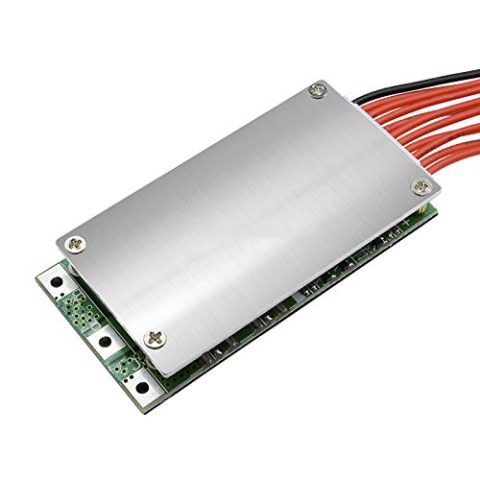
The BMS 10S 36V 30A is a battery protection and balancing board built for 10S lithium-ion and lithium-polymer packs. It sits between the cell pack and the load or charger. Rated voltage is 36 V, full-charge voltage is 42.0 V, and continuous discharge current reaches 30 A. The board measures just 64 × 35 mm.
This module is designed for 36 V electric bikes, electric scooters, and self-built 36 V projects. The 10S designation means ten cell groups wired in series (10 × 3.6 V). Current is switched through MOSFET transistors, so the pack disconnects before cells reach dangerous limits. Both 18650 and 21700 cells work, provided they are arranged in a 10S layout.
Alongside protection, the board performs passive balancing. During charging it evens out the voltages of individual cell groups. As a result, the whole pack charges more uniformly and lasts longer. Builders who assemble packs by spot welding or soldering will find this board a direct fit.
Key Benefits
- Overcharge protection – charging stops once the pack reaches the 42.0 V limit.
- Over-discharge protection – discharge is cut off before cells drop to a damaging level.
- Short-circuit protection – the output disconnects instantly if the P- and positive circuit is shorted.
- Overcurrent protection – the threshold sits at 30 A continuous discharge current.
- Passive balancing across 10 groups – voltage equilibrium is maintained throughout the charge cycle.
- Compact 64 × 35 mm footprint – the board fits inside narrow 36 V battery enclosures.
- Li-ion and Li-Po compatibility – suits both 18650 and 21700 cells in a 10S arrangement.
- Temperature and polarity monitoring – typical protection is provided, depending on version.
Who Is This Board For?
This board suits 36 V electric bicycles and electric scooters running a 10S Li-ion or Li-Po pack. It also fits self-built (DIY) 36 V projects. Typical examples include mobility trolleys, tool battery packs, and backup power units.
The product is aimed at builders who assemble their own packs. Spot welding and soldering are both common assembly methods here. Above all, it serves anyone replacing an old protection board that has failed or tripped permanently.
Important: the board works only with 10S lithium-ion or lithium-polymer packs. It is not suitable for LiFePO4 chemistry. Likewise, it does not fit other series counts, such as 13S 48 V packs.
Technical Specifications
| Configuration | 10S (10 cell groups in series, 10 × 3.6 V) |
|---|---|
| Rated voltage | 36 V |
| Full-charge voltage | 42.0 V |
| Max. continuous discharge current | Up to 30 A |
| Cell chemistry | Li-ion / Li-Po |
| Balancing | Passive; balancing current depends on version |
| Protections | Overcharge, over-discharge, short circuit, overcurrent |
| Additional monitoring | Temperature and polarity (version dependent) |
| Dimensions | 64 × 35 mm |
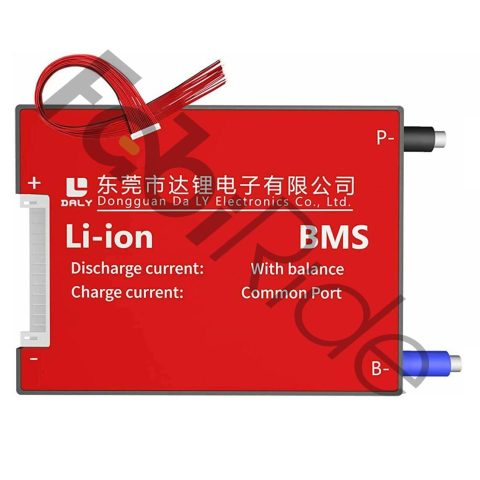
| Connections | B- terminal, P-/C- terminal, balance leads B1-B10 |
| Applications | Electric bikes, electric scooters, 36 V DIY projects |
| Switching element | MOSFET transistors |
Installation Notes
Follow the correct wiring scheme: B-, P-/C-, and the balance lead sequence B1-B10. Connect the balance leads first, in cell order. Only then connect the main terminals. Avoid brief accidental contacts while mounting.
Use wire with adequate cross-section as well. At 30 A, thin wire heats up quickly. Integrating a fuse is recommended. Pay attention to ingress protection and cooling requirements inside the enclosure.
Why Choose the BMS 10S 36V 30A?
This board combines four protections and balancing in a single 64 × 35 mm module. Consequently, it fits where larger boards will not – inside narrow scooter stem tubes and bike frame carriers. Space-constrained builds benefit most from that footprint.
The 30 A rating is higher than the common 15-20 A class of 36 V boards. Therefore it suits stronger 36 V motors that briefly draw heavier current. Balancing covers all ten groups, not just a portion of them.
One thing is worth knowing, however. Passive balancing will not repair a badly mismatched or damaged pack. Cells should be reasonably matched before assembly.
Frequently Asked Questions
Will this BMS work with a 36 V electric scooter?
- Yes, provided the scooter uses a 10S Li-ion or Li-Po pack.
- Rated voltage is 36 V and full-charge voltage is 42.0 V.
- The 64 × 35 mm size fits inside narrow scooter stem tubes.
Is it suitable for a 36 V electric bike battery?
- Yes, 36 V e-bike packs built in 10S configuration are supported.
- Continuous discharge of up to 30 A covers stronger 36 V motors.
- The board mounts inside standard frame-mounted battery carriers.
Can I use it with a 13S 48 V pack?
- No, the board is fixed at 10S and will not work with other series counts.
- It is also incompatible with LiFePO4 chemistry.
Which cells does it support?
- Li-ion and Li-Po chemistry, in a 10S arrangement.
- Both 18650 and 21700 cell formats are covered.
How does the balancing work?
- Balancing is passive and runs during charging.
- All 10 cell groups are equalised through leads B1-B10.
- Balancing current depends on the board version.
What protections are built in?
- Overcharge cut-off at the 42.0 V limit.
- Over-discharge cut-off before cells drop too low.
- Instant short-circuit disconnection and a 30 A overcurrent threshold.
How do I wire it correctly?
- Connect the balance leads B1-B10 first, following cell order.
- Then connect the B- and P-/C- main terminals.
- Use thick enough wire and add a fuse for 30 A operation.
The BMS 10S 36V 30A brings four protections, passive balancing, and MOSFET switching into a compact board for 10S packs. Whether you are rebuilding a 36 V e-bike battery, servicing a scooter pack, or assembling a DIY power block, the specifications remain the same: 36 V nominal, 42.0 V full charge, up to 30 A continuous. Match your cells well, wire the balance leads in order, and the pack will charge evenly for many cycles.
There are no reviews yet.