



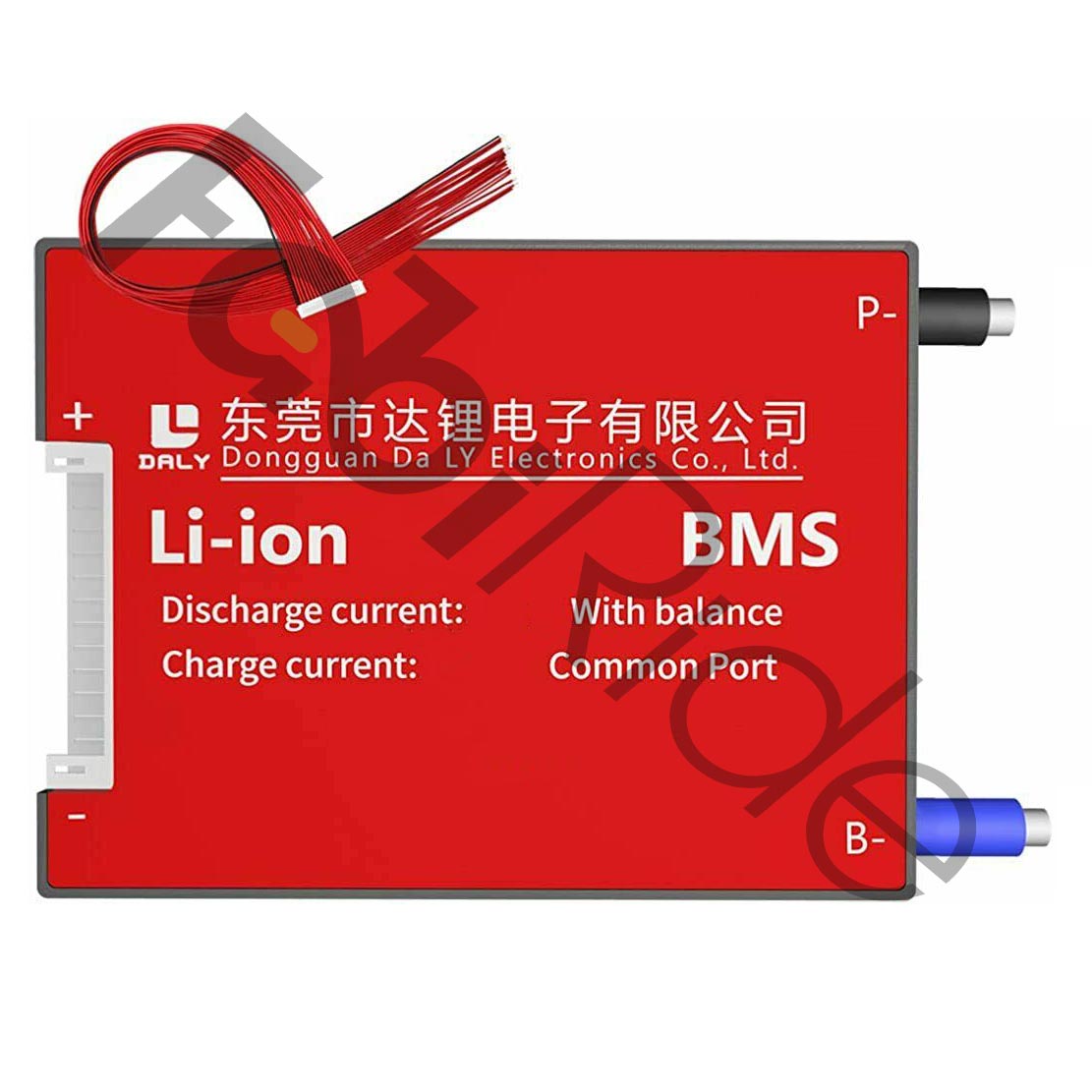
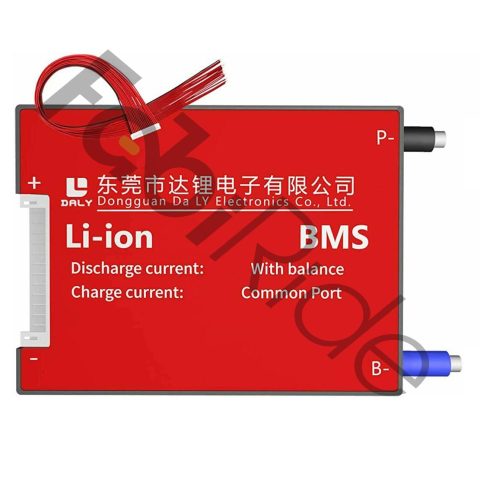
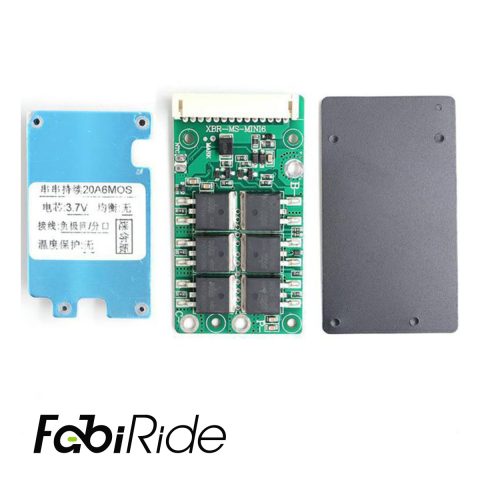
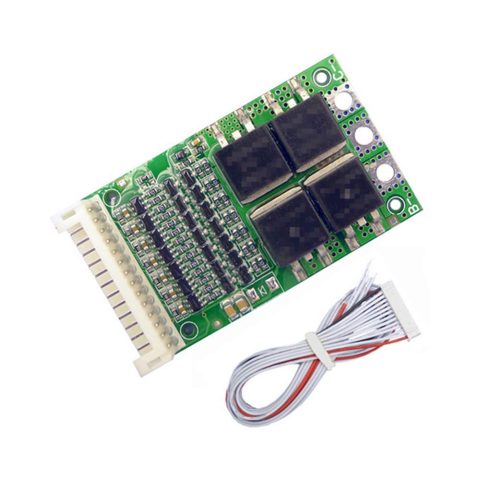
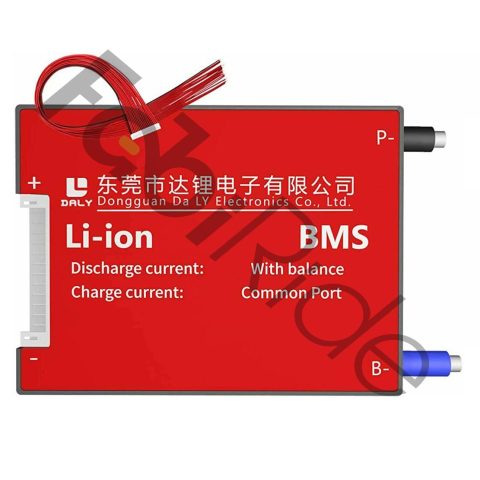
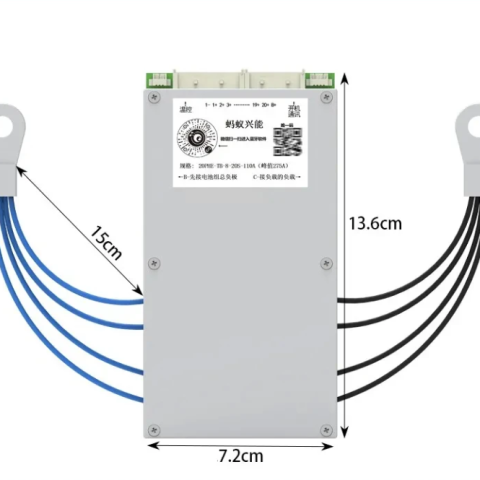
The BMS 16S 60V 60A is a lithium battery protection board (battery management system) built for 16-cell series packs. It manages a 16S configuration, handles 60 A of continuous discharge current and routes both charging and discharging through a single shared C− port. Because of that common port layout, it suits e-bikes, electric scooters, go-karts, light electric vehicles and DIY energy storage packs.
This board works with 18650 and 21700 cells in Li-ion and LiPo chemistries. A 16S Li-ion pack carries a nominal voltage of roughly 59.2 V and reaches 67.2 V when fully charged. The “60 V” figure describes the system class, not the charging voltage. LiFePO4 packs require checking the voltage thresholds first, since a 16S LiFePO4 pack tops out near 58.4 V.
At 60 A continuous discharge in a 60 V class system, the board supports roughly a 2 kW power level. That headroom covers daily commuting as well as steeper climbs, so it fits both welded packs and modular builds.
Key Benefits
- Common C− port – the charger negative and the controller negative land on the same terminal, so the wiring count drops.
- Fewer connection errors – simplified installation also makes later fault-finding easier.
- Overcharge protection – prevents cells from climbing past the defined upper voltage limit.
- Over-discharge protection – cuts the discharge path once cell voltage falls too low.
- Overcurrent protection – limits current whenever the load pushes beyond the 60 A threshold.
- Short circuit protection – breaks the circuit immediately in the event of a short.
- Passive balancing – evens out cell voltages and extends the working life of the pack.
- Steady 60 A discharge – enough current for everyday riding and demanding inclines alike.
Who Is This For
This BMS 16S 60V 60A installs into battery packs for electric bikes and electric scooters. It also serves go-karts and other light electric vehicles (EV) that run on 60 V class power. Riders upgrading a worn pack will find the terminal layout straightforward.
The second major group is builders of DIY energy storage packs and custom-assembled battery packs. Since the board accepts 18650 and 21700 cells, it fits spot-welded packs as well as modular cell-holder constructions. Balance leads run from B1 through B16, covering all sixteen cell taps.
Before choosing, weigh the demands of your controller. If the controller draws large peak currents, step up to a higher amperage BMS class instead. For a sustained 60 A load, however, this board is rated directly.
Technical Specifications
| Product type | Battery protection board (BMS) |
| Cell count | 16 cells in series (16S) |
| Chemistry | Li-ion / LiPo (18650, 21700); LiFePO4 with adjusted thresholds |
| System class | 60 V |
| Nominal voltage | ~59.2 V (16S Li-ion) |
| Full charge voltage | 67.2 V (Li-ion); ~58.4 V (16S LiFePO4) |
| Max continuous discharge | 60 A (≈2 kW class) |
| Peak current | According to the specific model datasheet |
| Port type | Common port (charge and discharge via C−) |
| Terminals | B−, C− (common), balance connector |
| Balancing | Passive, typically 30–100 mA (version dependent) |
| Balance lead range | B1…B16 |
| Protections | Overcharge, over-discharge, overcurrent, short circuit |
| Operating temperature | ~−20…60 °C |
| Recommended charger | 67.2 V CC/CV (16S Li-ion) |
How to Wire It
Connect B− directly to the negative terminal of the battery pack. The C− terminal becomes the shared point for the charger negative and the controller or motor negative. B(+) or system positive usually runs straight from the pack to the system according to your wiring diagram.
Next, attach the balance leads (B1…B16) in strict order to each cell junction. That sequence is the single most important installation step. Mistakes here can damage both the BMS and the battery pack. Finally, provide ventilation and insulate the board against vibration and moisture.
Why Choose This Board
The main difference from separate-port boards lies in the shared terminal. Charging and discharging both pass through C−, which means fewer cables inside the enclosure and fewer places for a wiring mistake to hide. For compact e-bike and scooter packs, that saved space matters.
Diagnostics also become simpler. With one negative path instead of two, tracing a fault takes less time and fewer measurements. Meanwhile, the four-way protection set and passive balancing keep all sixteen cells within their safe window during every charge cycle.
Frequently Asked Questions
Will this BMS work with my e-bike or electric scooter pack?
- Yes, it is designed for e-bike, electric scooter and go-kart packs in the 60 V class.
- Your pack must use exactly 16 cells in series.
- Continuous draw should stay at or below 60 A.
Which cells and chemistries does it support?
- Li-ion and LiPo cells in 18650 and 21700 formats.
- LiFePO4 only after checking that the voltage thresholds match that chemistry.
What charger should I use?
- A 67.2 V CC/CV charger for a 16S Li-ion pack.
- The charger negative connects to C−, the same terminal as the controller negative.
Does 60 V mean the pack charges to 60 V?
- No, 60 V describes the system class only.
- Nominal voltage is around 59.2 V, and full charge sits at 67.2 V.
Can I use it in a go-kart or DIY power wall?
- Yes, go-karts and other light electric vehicles are among the intended applications.
- DIY energy storage packs and self-built battery packs also work well.
What protections are included?
- Overcharge, over-discharge, overcurrent and short circuit protection.
- Passive balancing across B1 to B16 evens out cell voltages.
What if my controller demands high peak currents?
- Check the peak rating in the datasheet for your specific model version.
- For heavy peak loads, choose a BMS in a higher amperage class instead.
How should the board be mounted?
- Ensure ventilation around the board inside the pack enclosure.
- Insulate it from vibration and moisture.
With a shared C− terminal, sixteen balance taps and 60 A of continuous headroom, this protection board keeps a 16S Li-ion pack organised and safe. Wire the balance leads carefully, pair it with a matching 67.2 V charger, and it will manage your e-bike, scooter, go-kart or storage pack through every cycle.
There are no reviews yet.