



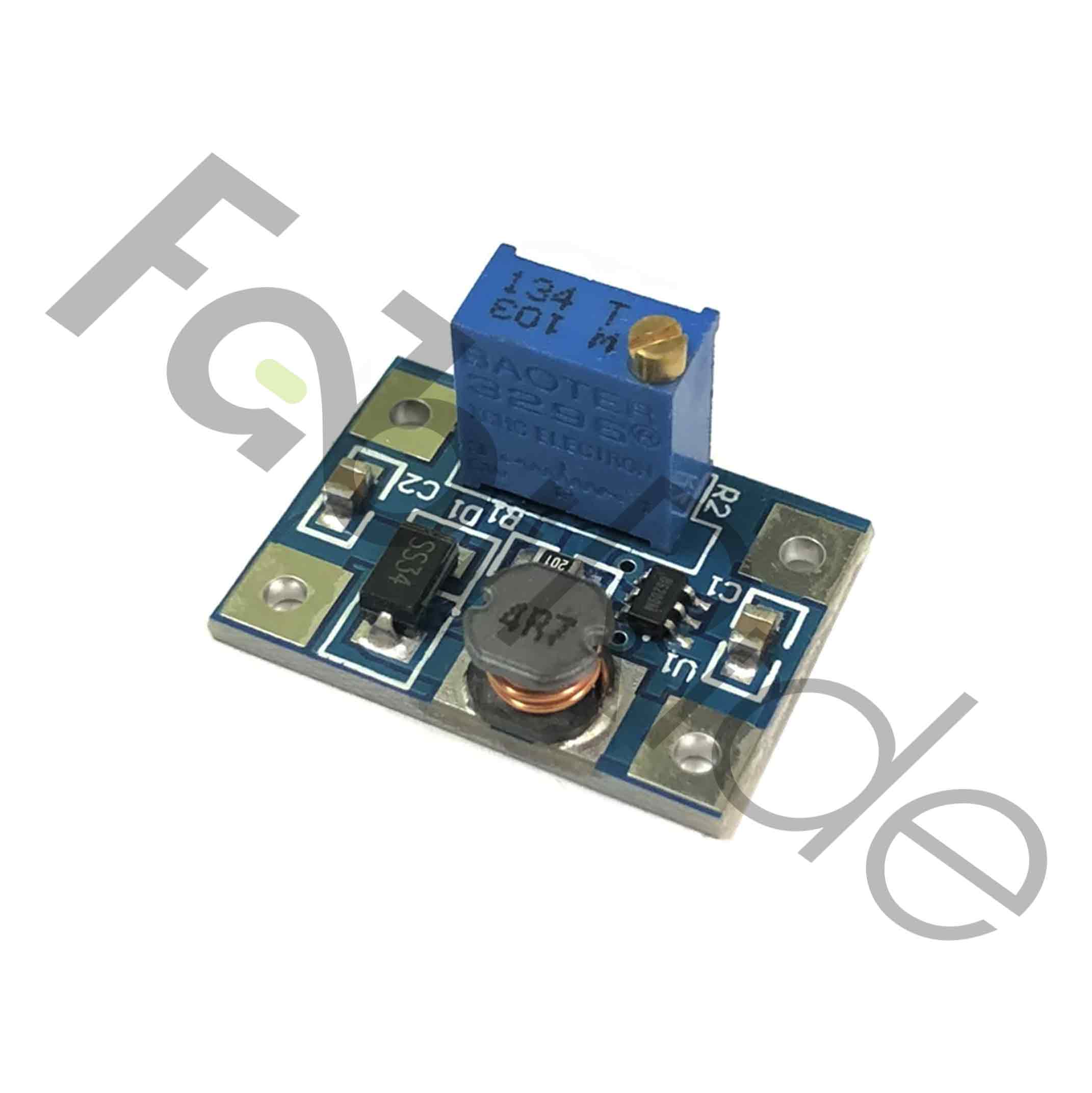
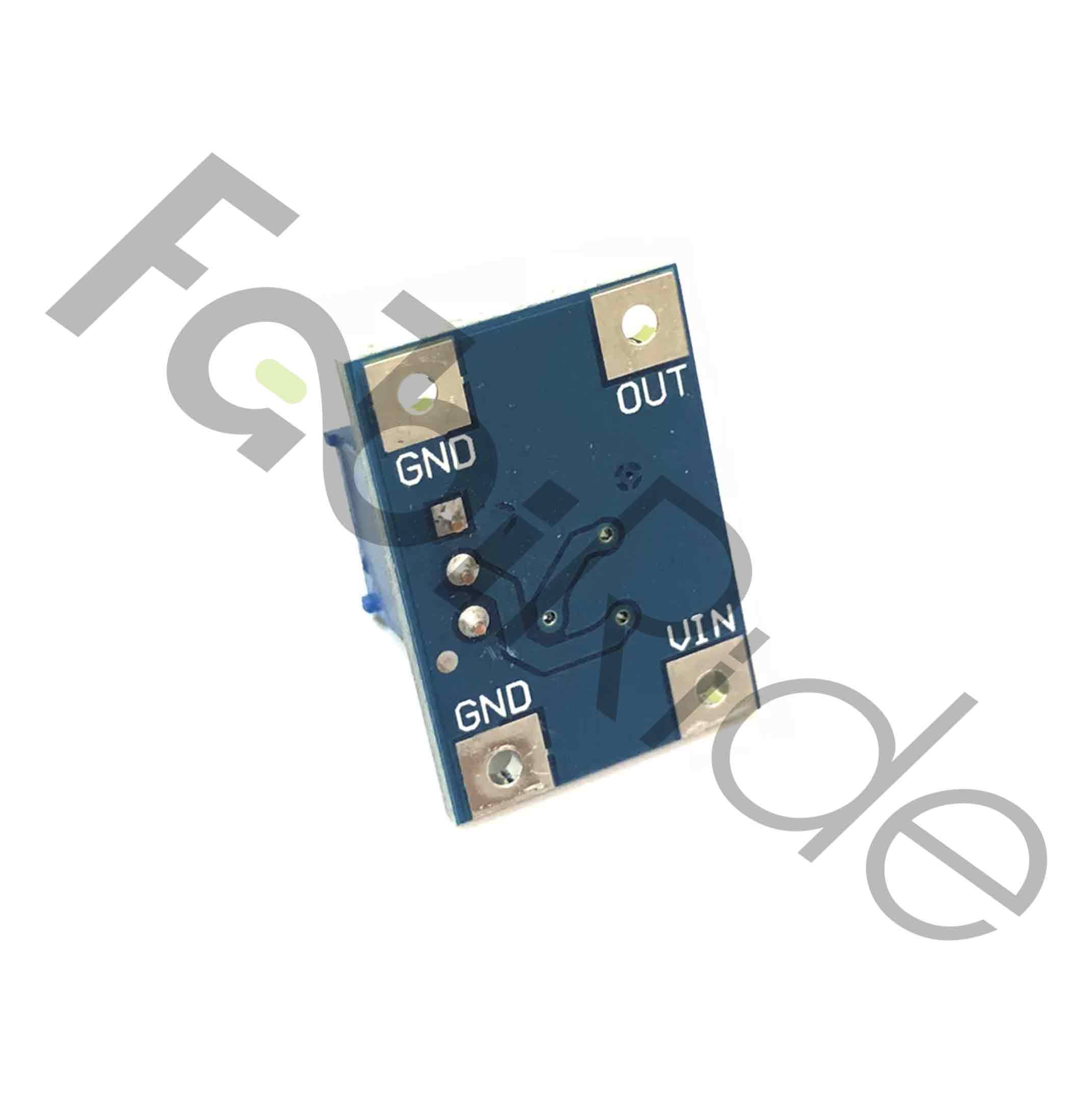
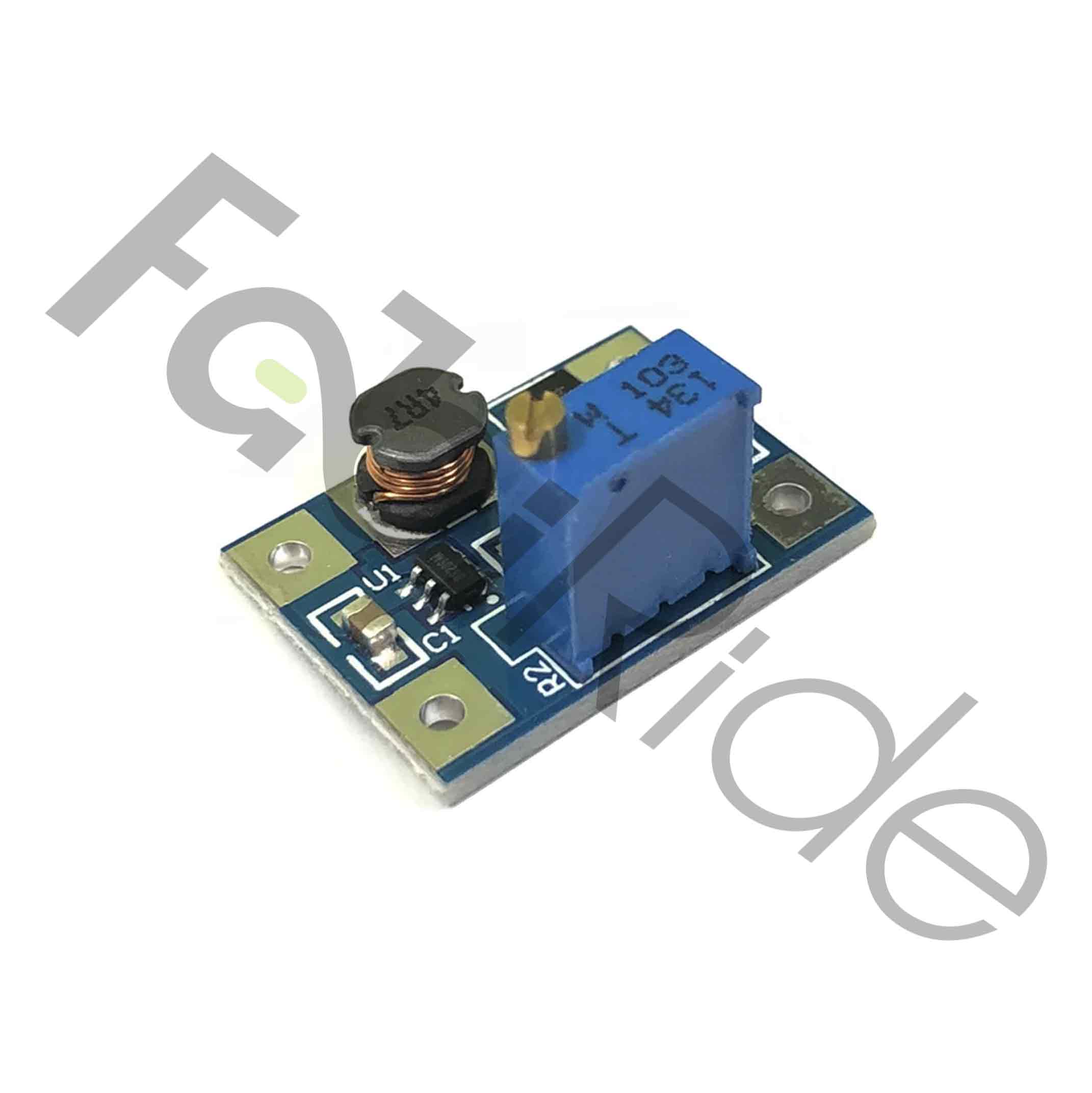
This adjustable step up boost converter takes a 2-24 V DC input and raises it to 2-28 V DC, with up to 2 A of output current. It is built to power LED strips, sensors, microcontrollers, communication modules and audio modules from a supply that is simply too low on its own. Output voltage is set with the onboard potentiometer, so one board covers 5 V, 12 V and 24 V circuits.
The module starts working from just 2 V. Therefore it suits a single 3.7 V lithium-ion (Li-ion) cell, small NiMH packs, lead-acid batteries and USB sources. A common example: take 3.7 V from a Li-ion battery and get a stable 12 V rail. Because the upper limit reaches 28 V, standard 24 V equipment runs with a little headroom.
This is a switching converter, not a charger. It holds the voltage you set, but it has no charging algorithm. Conversion runs in one direction only: voltage goes up, never down. Hobbyists, prototypers and engineers use it in DIY builds, telemetry nodes and e-mobility accessory projects.
Key Benefits
- Wide 2-24 V input range – operation starts from 2 V, so small Li-ion, NiMH and lead-acid packs remain usable.
- Adjustable 2-28 V output – set by potentiometer, with no soldering iron and no resistor swaps.
- Up to 2 A output current – enough for most 5-24 V electronics blocks and LED solutions.
- Compact board – the module fits narrow enclosures and small prototype boxes.
- Switching operation – efficiency is higher than a linear regulator, so less energy turns into heat.
- Single adjustment point – dial in the voltage unloaded, then connect your load.
- Versatile use – from LED strips to meters, fans and lab power experiments.
- Direct 24 V result – the 28 V ceiling powers 24 V devices with reserve for cable losses.
Who Is This For?
This step-up converter suits LEDs and LED strips, provided you use a suitable current-limiting resistor or a proper LED driver. It also feeds microcontrollers, sensors and communication modules that run on 5 V, 12 V or 24 V. Audio modules and other low-power equipment work equally well.
Meters and fans are a further match. In addition, the module is widely used in laboratory and prototype power experiments, where you need a specific voltage from the battery already on the bench. Getting there takes seconds with the potentiometer.
Electronics enthusiasts and engineers will find it useful for DIY prototypes, e-mobility accessories and telemetry nodes. The power source can be a Li-ion, NiMH or lead-acid battery, and a USB supply works too. As a result, one small board covers a broad set of bench and field scenarios.
Technical Specifications
| Type | DC-DC voltage booster, Boost (Step-UP) |
| Input voltage | 2-24 V DC |
| Output voltage | 2-28 V DC, adjustable |
| Maximum output current | 2 A |
| Real power | Limited by input voltage and efficiency |
| Control | Potentiometer for output voltage setting |
| Protections | Batch dependent; an input fuse is recommended |
| Recommended fuse | 2-3 A in the input circuit |
| Cooling | Higher current requires better heat dissipation |
| Construction | Bare board module, no housing |
Installation Tips
- Set the voltage first – adjust the output with no load attached, then connect the load.
- Observe polarity strictly – check both input and output wires before powering up.
- Fit an input fuse – a 2-3 A fuse in the input circuit is the sensible choice.
- Provide cooling – heat dissipation matters once you work close to 2 A.
- Use adequate wire gauge – thin wires cost you voltage, especially at low input.
Why Choose This Step-Up Converter?
The main advantage is operation from just 2 V. Many converters demand at least 4-5 V at the input, so a depleted cell no longer carries them. This board keeps running with a single lithium-ion cell or a few NiMH cells behind it.
Second, the 28 V upper limit goes beyond the usual 24 V requirement. Consequently you can feed 24 V equipment with a small margin and compensate for wiring losses. That margin matters on longer runs and thinner conductors.
Third, the potentiometer replaces fixed-voltage boards on your shelf. Instead of stocking separate 5 V, 12 V and 24 V modules, you keep one adjustable unit. Switching operation then keeps efficiency higher than a linear regulator would allow.
Frequently Asked Questions
Can it power a 12 V LED strip from a 3.7 V Li-ion battery?
- Yes. The input starts at 2 V, so a single 3.7 V cell is enough.
- Set 12 V with the potentiometer before connecting the strip.
- Keep total current within the 2 A limit.
Is this module compatible with microcontrollers and sensors?
- Yes, it suits microcontrollers, sensors and communication modules.
- Common 5 V, 12 V and 24 V rails are all within its range.
- Audio modules and small meters work as well.
Can it charge a battery?
- No. This is a switching converter, not a charger.
- It holds the set output voltage without a charging algorithm.
Does it lower voltage as well?
- No. Conversion works in one direction only: voltage goes up.
- Output must always be higher than the input for correct operation.
Which batteries work as a power source?
- Li-ion, NiMH and lead-acid packs are all suitable.
- A USB supply can also serve as the input.
Do I need a fuse?
- An input fuse is recommended, typically 2-3 A.
- Protection features vary by production batch.
How do I set the output voltage correctly?
- Turn the potentiometer with no load connected.
- Measure the output, then attach your load.
Will it get hot at full load?
- Near 2 A, heat dissipation becomes important.
- Improve airflow or add cooling for continuous high-current work.
With a 2-24 V input, a 2-28 V adjustable output and 2 A of current on tap, this compact board covers most low-voltage boost tasks on the bench and in the field. Set the voltage, fit an input fuse and wire it correctly, and it will quietly hold your rail where you need it.


There are no reviews yet.