



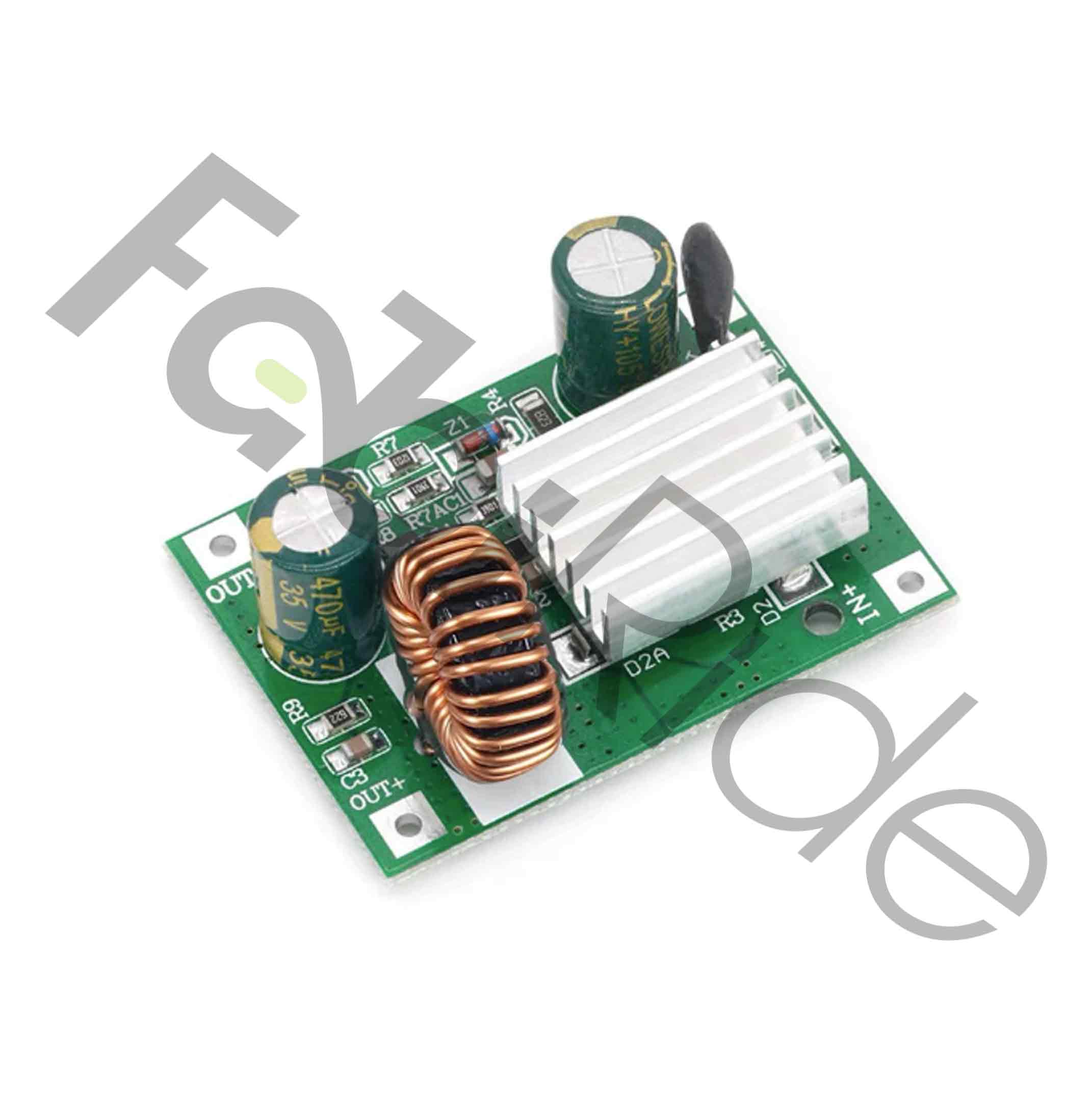
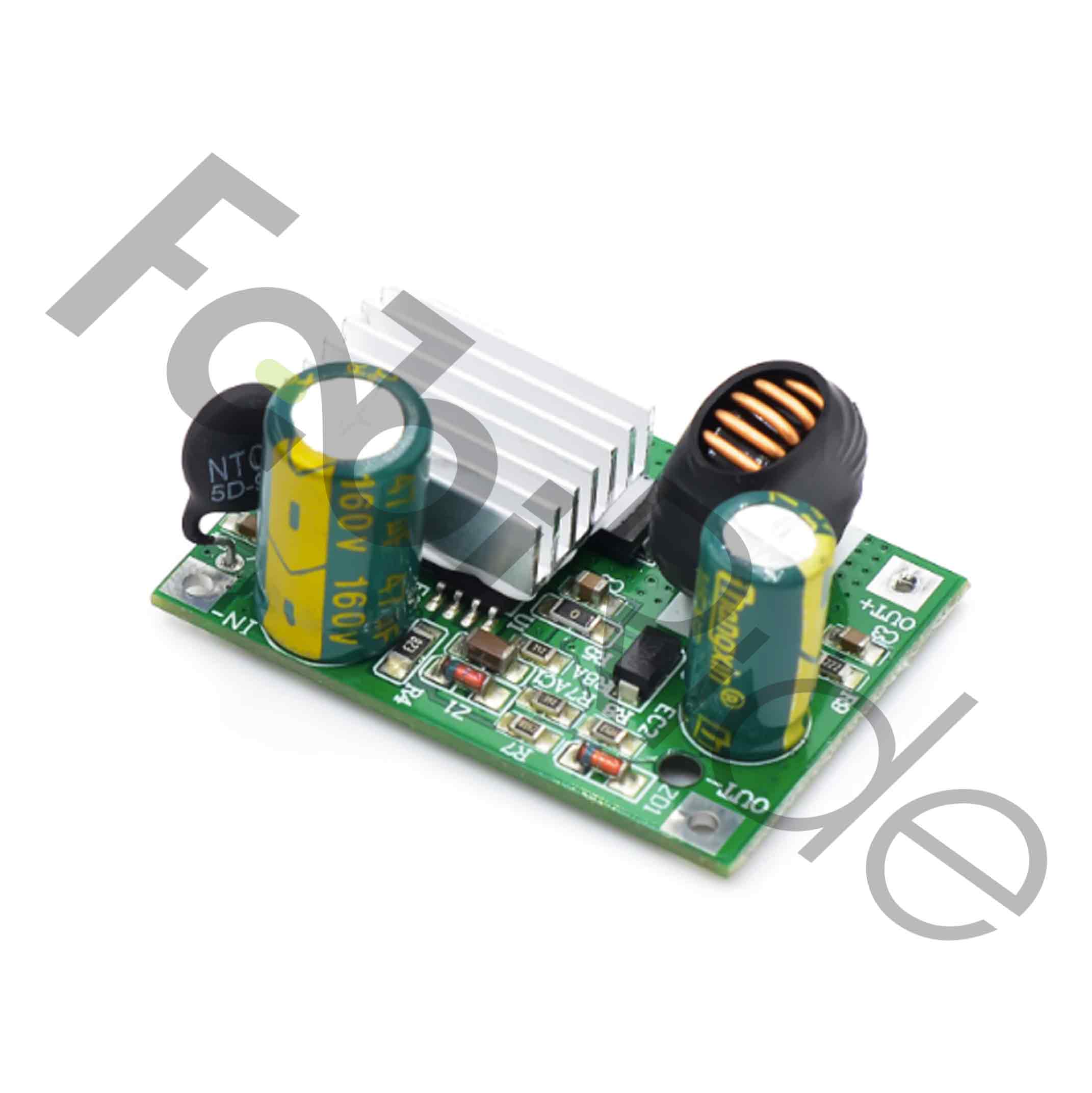
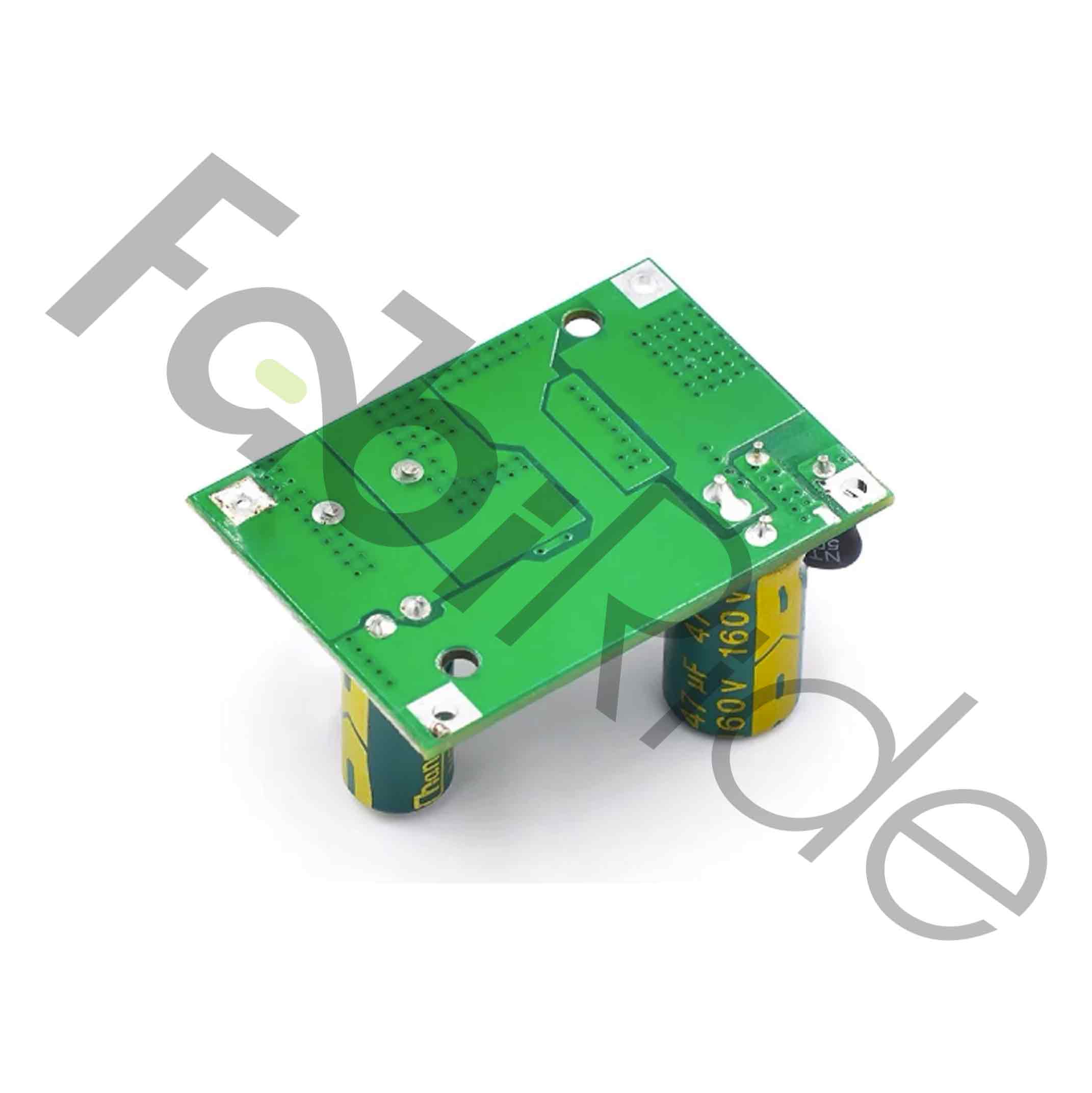
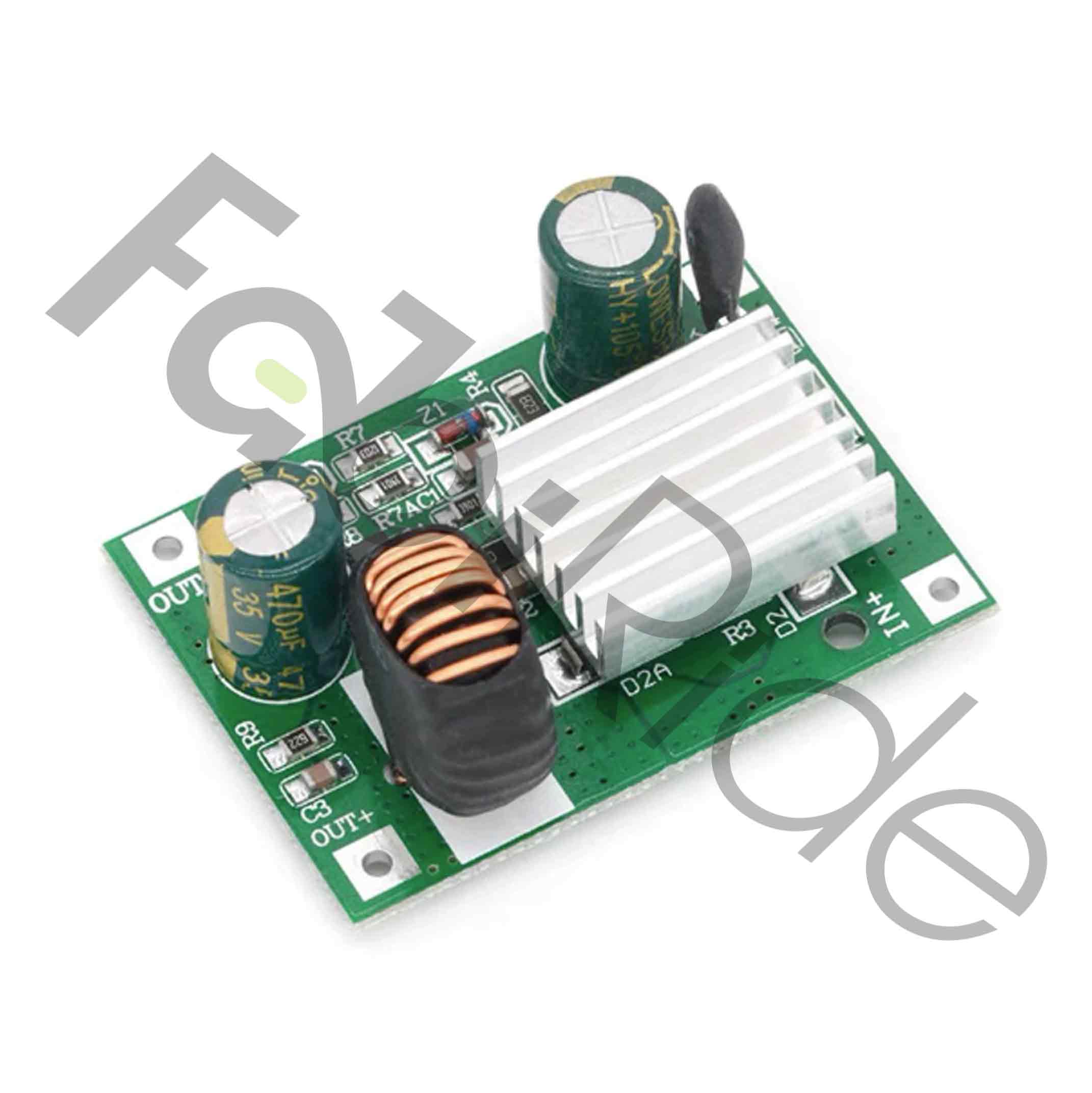
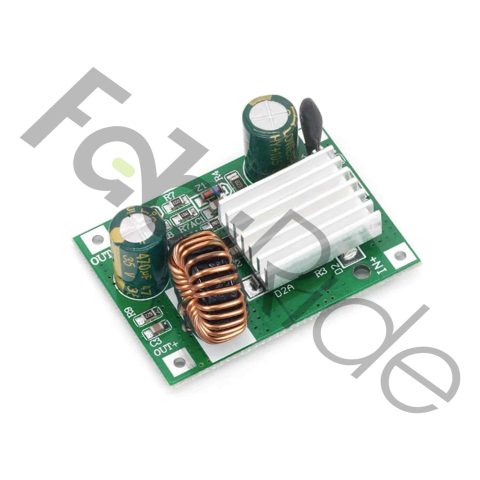
This 30-90V to 24V converter is a compact DC-DC step-down module that powers 24V accessories on electric bikes, electric scooters and electric motorcycles. It accepts any input between 30V and 90V DC. Then it delivers a regulated 24V DC output at up to 2A, which equals roughly 48W of usable power.
The wide input window covers 36V, 42V, 48V, 52V, 60V, 72V and 84V systems. As a result, one module serves battery packs from 13s all the way to 20s lithium-ion. A fully charged 72V (20s) pack peaks near 84V, and that figure still sits inside the working range.
Riders use it to run 24V LED lighting, relays, GPS receivers, communication gear and cameras. Moreover, the compact housing fits into tight spaces such as under a frame cover or beside the controller. Connections are made through clearly marked Vin+/GND and Vout+/GND terminals.
Key Benefits
- Wide 30-90V input range – one module covers 36V, 42V, 48V, 52V, 60V, 72V and 84V systems.
- Regulated 24V output – steady voltage suits sensitive 24V electronics on the vehicle.
- 2A maximum output current – the power budget reaches approximately 48W.
- Broad accessory support – lighting, control relays, telemetry and other add-ons run from one source.
- Compact housing – mounting works in limited space beside the controller or under a cover.
- Direct DC operation – it runs straight from the vehicle battery, with no intermediate power supply.
- 20s lithium-ion compatibility – the 90V ceiling leaves headroom for a fully charged pack.
- Clear Vin+/GND and Vout+/GND terminals – wiring stays straightforward and polarity stays obvious.
Who Is This Converter For?
This module suits electric bikes, electric scooters and electric motorcycles running 36V, 42V, 48V, 52V, 60V, 72V or 84V batteries. Therefore it works on light urban vehicles as well as on more powerful 72V builds. The same part can move from a 48V scooter to a 72V e-motorcycle without any swap.
Typical users are builders and enthusiasts fitting 24V LED strips or headlights up to about 48W. It also serves anyone wiring 24V relay coils, sirens and valves into a custom harness. In addition, the converter feeds GPS modules, cameras, and communication or telemetry units.
The module is designed for dry and normal operating conditions. If high resistance to water and dust is required, choose a separate IP67-rated model instead.
Technical Specifications
| Type | DC-DC step-down converter (buck) |
| Input voltage | 30-90V DC |
| Supported systems | 36V, 42V, 48V, 52V, 60V, 72V, 84V |
| Output voltage | 24V DC (regulated) |
| Max output current | 2A |
| Max power | ~48W |
| Wires / terminals | Vin+/GND, Vout+/GND (varies by batch) |
| Operating environment | Dry / normal conditions |
| Battery compatibility | 13s to 20s lithium-ion packs |
| Purpose | Powering 24V accessories on e-bikes, scooters and e-motorcycles |
Installation Tips
- Fit a fuse on the input, for example 2-3A, as close to the battery as possible.
- Observe polarity at both terminal pairs and use an adequate wire cross-section.
- Mount the module so that heat dissipation stays sufficient during longer rides.
- For sensitive loads, add an output fuse and extra filtering.
Why Choose This 30-90V to 24V Converter?
The main difference is the 60V-wide input window. Many narrower modules cover only one nominal voltage. Because of that, this converter can move from a 48V scooter to a 72V e-motorcycle without changing the component.
Second, the output is regulated rather than simply reduced. So 24V cameras, GPS units and telemetry modules receive steady voltage even as the pack state of charge drops during a ride.
Third, this is a voltage regulator, not a battery charger. It feeds loads directly from the vehicle battery. Consequently, no separate 24V battery is needed anywhere in the build.
Frequently Asked Questions
Is this converter suitable for a 72V (20s) lithium-ion system?
- Yes. A nominal 72V 20s pack reaches roughly 84V when fully charged.
- That value stays within the 30-90V input range.
Will it work on a 48V or 52V e-bike?
- Yes. Both 48V and 52V systems fall inside the supported list.
- The same module also covers 36V, 42V, 60V, 72V and 84V builds.
How much can I run from the 24V output?
- The maximum output current is 2A, which is about 48W.
- LED strips, headlights, relay coils, sirens and valves fit within that budget.
Can it power a GPS tracker or a camera?
- Yes. It supplies 24V GPS modules, cameras and telemetry units.
- The regulated output keeps those devices stable as the battery discharges.
Is this a battery charger?
- No. It is a step-down voltage regulator for accessory loads.
- Power comes directly from the vehicle battery pack.
Can I mount it under a frame cover?
- Yes. The compact housing installs in limited space or beside the controller.
- Leave room around it so heat can escape.
Is the module waterproof?
- No. It is intended for dry and normal operating conditions.
- For wet or dusty environments, pick a separate IP67-rated model.
How do I connect it correctly?
- Battery wires go to Vin+/GND and the accessory goes to Vout+/GND.
- Add an input fuse of 2-3A near the battery before the first test.
With a 30-90V input window, a regulated 24V output and a 2A ceiling, this converter is a single solution for accessory power across 36V through 84V vehicles. Wire it to Vin+/GND and Vout+/GND, add a fuse, and your lighting, relays and telemetry run from the main pack.


There are no reviews yet.