



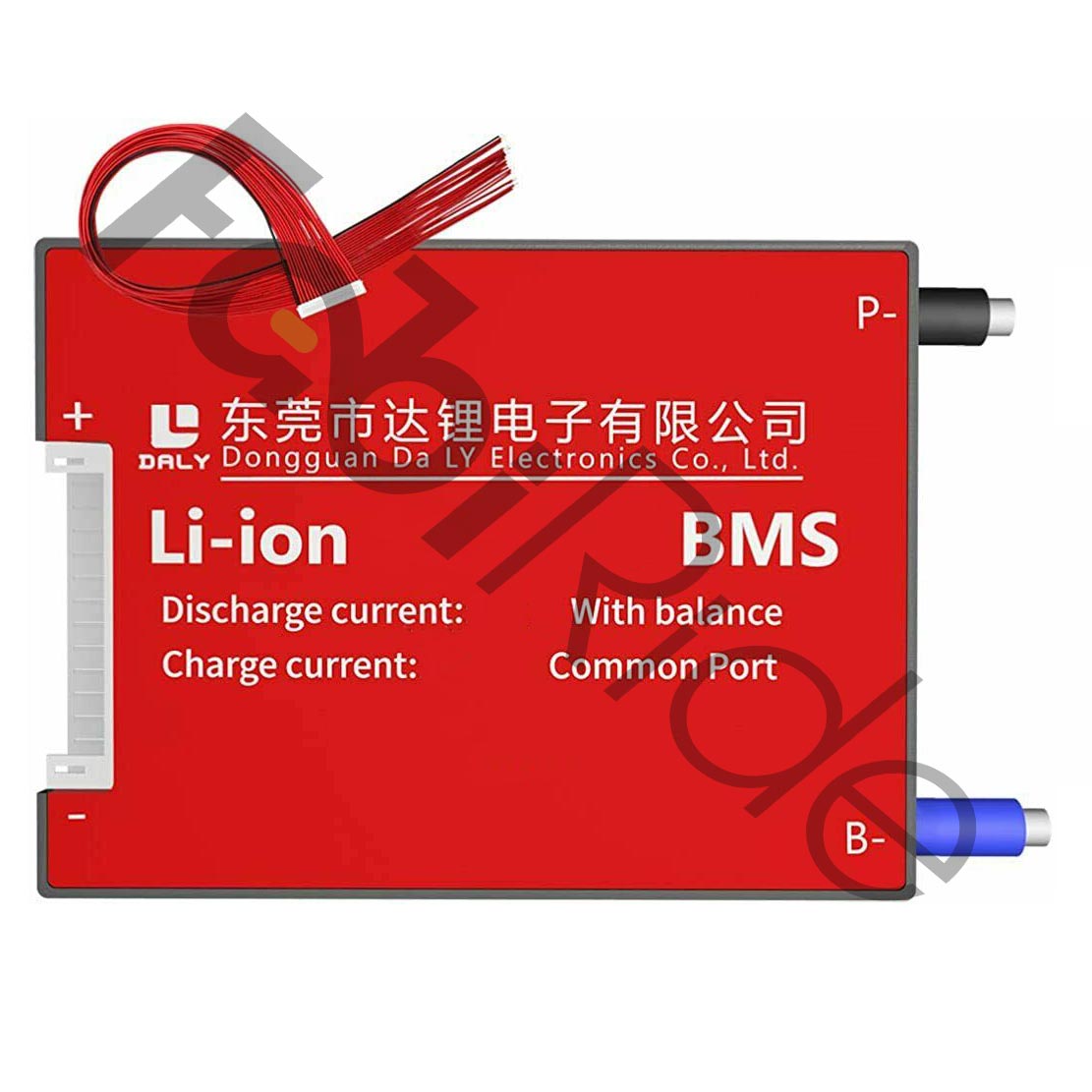
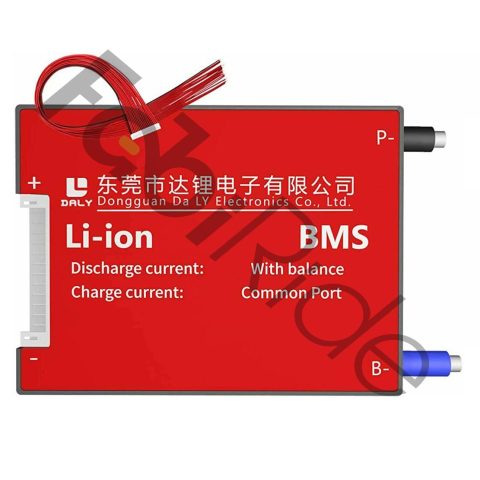
The BMS 20S 72V 60A is a battery management system built for 20 lithium cells wired in series. It protects packs used in electric bikes, electric scooters, go-karts, light electric vehicles and DIY energy storage builds. The board works with 18650 and 21700 Li-ion cells as well as LiPo cells.
System voltage sits in the 72 V class. A fully charged 20S Li-ion pack reaches 84 V. Maximum continuous discharge current is 60 A, which corresponds to roughly a 4.3 kW power class. Momentary peak current depends on the specific model and is listed in its datasheet.
This version uses a common C− port. Charging and discharging therefore run through the same terminal. As a result, the wiring inside the pack stays shorter and tidier.
Key Benefits
- Common C− port — fewer wires and fewer connection mistakes during pack assembly.
- Easier diagnostics — one shared negative point for charge and discharge simplifies fault finding.
- Overcharge protection — the board disconnects the circuit once cell voltage reaches the upper threshold.
- Over-discharge protection — cells are not allowed to drop below the cut-off voltage.
- Overcurrent protection — current above the 60 A continuous discharge limit is restricted.
- Short circuit protection — the circuit is interrupted instantly.
- Passive cell balancing — a 30–100 mA current evens out cell voltages and extends pack service life.
Who Is This For?
This 20S 72V 60A BMS suits electric bikes and electric scooters running on a 72 V class system. In addition, it fits go-karts and light electric vehicles. Builders also use the board in DIY energy storage packs.
It is chemistry-matched to Li-ion and LiPo packs assembled from 18650 or 21700 format cells. The configuration is 20S, meaning 20 cells in series, for a nominal pack voltage of about 72 V. Pack manufacturers, workshops and hobbyists repairing or upgrading 72 V packs are the main audience. However, if your controller demands high peak currents, choose a BMS in a higher amperage class.
Technical Specifications
| Configuration | 20S – 20 cells in series |
| Chemistry | Li-ion / LiPo (18650, 21700) |
| System voltage | 72 V class |
| Fully charged pack voltage | 84 V |
| Max. continuous discharge current | 60 A |
| Power class | ~4.3 kW |
| Peak current | According to the specific model datasheet |
| Balancing | Passive, typically 30–100 mA (version dependent) |
| Terminals | B−, C− (common), balance connector |
| Balance leads | B1…B20 |
| Protections | Overcharge, over-discharge, overcurrent, short circuit |
| Operating temperature | ~−20…60 °C |
| Required charger | 84 V CC/CV, 20S Li-ion |
Wiring Guidance
B− connects directly to the battery negative terminal. C− is the shared negative point for the charger, the controller and the motor. B(+) or system positive usually runs straight from the pack to the system. Always follow the wiring diagram supplied with your board.
The B1…B20 balance harness connects in strict order to each cell node. Mistakes here can damage the BMS or the whole pack. Furthermore, use a charger that matches the chemistry — a 20S Li-ion pack needs an 84 V CC/CV charger. Provide ventilation and insulate the board from vibration and moisture.
Why Choose the BMS 20S 72V 60A?
This board uses a common C− port instead of separate charge and discharge ports. Consequently, the pack needs fewer interconnections and the build stays compact. The 60 A continuous rating covers daily riding and steeper climbs on 72 V class vehicles.
Passive balancing at 30–100 mA works quietly in the background across all 20 cells. Note that LiFePO4 chemistry requires different voltage thresholds — a 20S LiFePO4 pack does not match this 72 V Li-ion system.
Frequently Asked Questions
Will this BMS work with my 72 V electric bike or scooter?
- Yes, it is designed for 72 V class e-bike and e-scooter systems.
- The pack must be 20S Li-ion or LiPo.
What charger do I need?
- An 84 V CC/CV charger rated for 20S Li-ion.
- 84 V is the fully charged voltage of the pack.
What does a common C− port mean?
- Charging and discharging share the same negative terminal.
- This reduces wiring and simplifies fault finding.
Can I use it on a go-kart or light electric vehicle?
- Yes, go-karts and light electric vehicles are listed applications.
- Confirm your controller stays within the 60 A continuous limit.
Which cells are supported?
- 18650 and 21700 Li-ion cells, plus LiPo cells.
- LiFePO4 packs need different voltage thresholds and are not a match.
How much power does 60 A deliver?
- Roughly a 4.3 kW power class at 72 V.
- Peak current figures come from the model datasheet.
How does balancing work?
- Passive balancing, typically 30–100 mA depending on version.
- It equalises cell voltages across the B1…B20 leads.
The BMS 20S 72V 60A is a practical choice for anyone assembling, repairing or upgrading a 72 V pack. Connect B−, C− and the B1…B20 balance harness in the correct order, pair the pack with an 84 V CC/CV charger, and the board handles overcharge, over-discharge, overcurrent and short circuit conditions within its 60 A rating.
There are no reviews yet.