



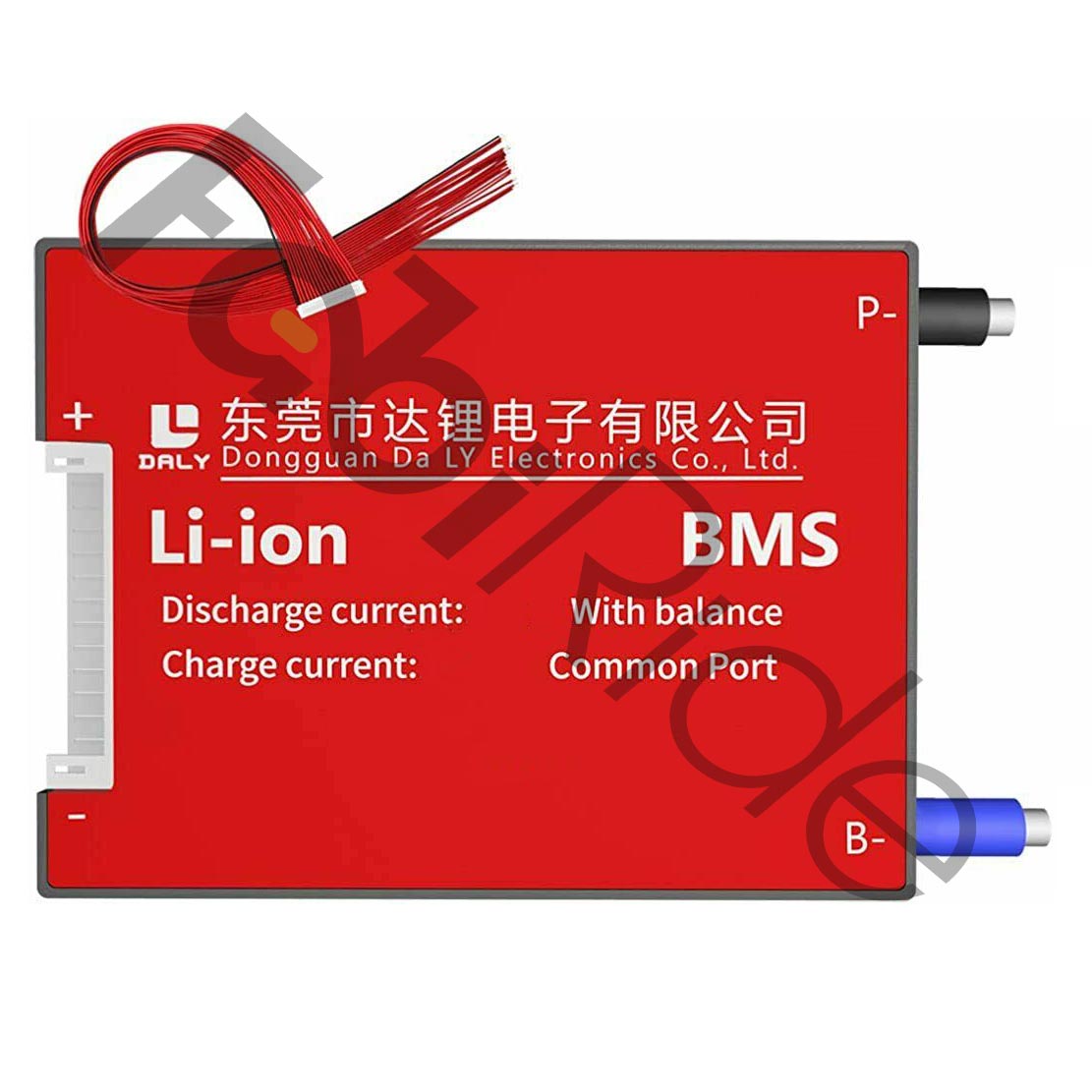
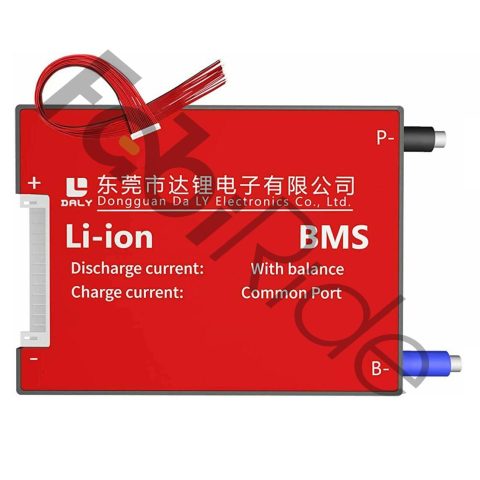
The BMS 14S 52V 40A is a battery management system for lithium-ion packs built from 14 cells in series. It fits electric bikes, electric scooters, go-karts and DIY energy storage packs. The board uses a common charge and discharge port marked C−. It handles 40 A of continuous discharge current and performs passive cell balancing.
A 14S configuration means fourteen cells wired in series. Nominal pack voltage sits at roughly 51.8 V, while a fully charged pack reaches about 58.8 V with lithium-ion chemistry. For that reason, this board is labelled as a 52 V system BMS. It suits 18650 and 21700 cylindrical cells as well as LiPo packs.
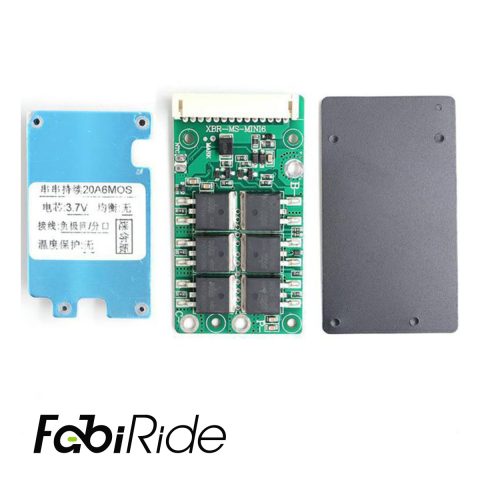
Note that this unit stores no energy of its own. It is neither a charger nor a motor controller. Instead, it is an electronics assembly mounted inside the battery pack itself. Pack builders and DIY makers choose it because the wiring stays straightforward from the first cell group to the last.
Key Benefits
- Common C− port – the same terminal serves both the charger and the motor controller, which simplifies installation.
- 40 A continuous discharge – enough headroom for most 1–2 kW light electric vehicle builds.
- 14S configuration – factory set for a 14-cell series pack with a ~58.8 V full-charge limit.
- Overcharge protection – charging stops once cell voltage climbs above the set threshold.
- Over-discharge protection – the load disconnects when cell voltage drops below the cut-off point.
- Overcurrent and short-circuit protection – the board reacts to excessive current in the discharge circuit.
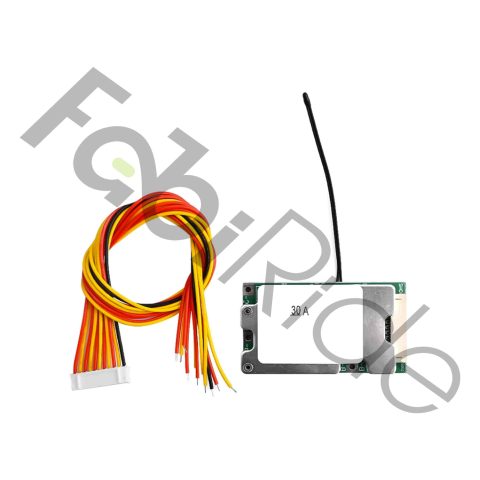
- Over-temperature protection – active on versions fitted with an NTC thermistor.
- Passive balancing – cell voltages even out at the end of charging, typically at 30–100 mA.
Who Is This Board For?
This BMS 14S 52V 40A board is built for electric bikes, electric scooters, go-karts and DIY energy storage packs. In every one of those builds, the pack must consist of exactly 14 cells in series. Anything other than a 14S arrangement will not match the board’s voltage windows.
Suitable chemistries include lithium-ion 18650 and 21700 cells plus lithium-polymer packs. With LiFePO4, however, compare the voltage limits carefully first. A 14S LiFePO4 pack carries a different nominal voltage than a 52 V lithium-ion system, so the thresholds will not line up.
The board is aimed at battery assemblers and hands-on builders. Typically, these are the people who spot-weld their own cell groups and route balance leads B1 through B14 themselves. It also works well as a replacement for an ageing pack’s original board, provided that board was likewise 14S with a shared port.
Technical Specifications
| Type | Battery management system (BMS), protection board |
| Configuration | 14S – 14 cells in series |
| Nominal voltage | 52 V (~51.8 V) |
| Full charge voltage | ~58.8 V (Li-ion) |
| Max continuous discharge current | 40 A |
| Peak current | Per the datasheet of the specific model |
| Cell chemistry | Li-ion (18650, 21700), LiPo; LiFePO4 subject to voltage limits |
| Port | Common charge and discharge port (C−), no separate P− |
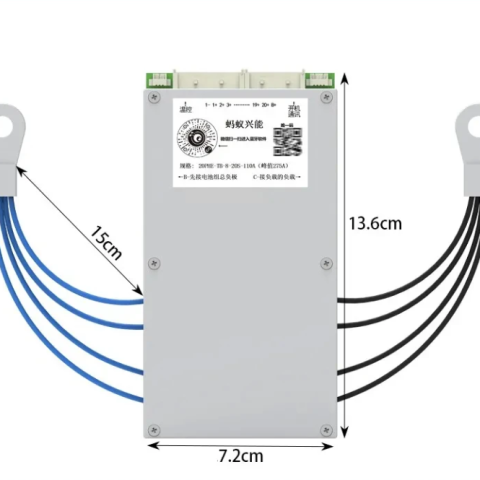
| Terminals | B−, C−, balance connector B1…B14 |
| Balancing | Passive, typically 30–100 mA (version dependent) |
| Protections | Overcharge, over-discharge, overcurrent, short circuit, over-temperature (with NTC) |
| Operating temperature range | Commonly −20…60 °C (see model label) |
How to Wire It Up
Connect B− directly to the negative terminal of the battery pack. The C− terminal then acts as the shared point for both the charger negative and the motor controller negative. Balance leads B1…B14 attach to their matching cell groups in sequence, starting at the first group and finishing at the fourteenth.
Why Choose the BMS 14S 52V 40A?
The main difference from two-port boards is the single C− terminal in place of a separate P− discharge terminal. Consequently, fewer wires run inside the pack and the assembly becomes easier to lay out. That matters most in slim e-bike frames and scooter decks where space is tight.
Keep in mind that the 40 A rating is continuous rather than momentary. When designing a 1–2 kW drivetrain, therefore, assess your controller’s peak current demand in advance. Equally important, the board’s cut-off voltages must match the chemistry of the cells you install.
Passive balancing works at the end of the charge cycle. It bleeds off excess energy from the higher cells so that the whole 14S string finishes charging closer together. Over many cycles, that keeps the pack’s usable capacity more consistent.
Frequently Asked Questions
Will this BMS work on my 52 V electric bike battery?
- Yes, provided the pack is built from 14 cells in series.
- Nominal voltage should be around 51.8 V, with full charge near 58.8 V.
- It is designed for e-bike, e-scooter and go-kart packs of that configuration.
Can I use it on an electric scooter or go-kart?
- Yes, both are listed applications for this board.
- The 40 A continuous rating suits most 1–2 kW light electric vehicle drives.
- Check the controller’s peak current draw before finalising your build.
What does a common C− port actually mean?
- The charger negative and the controller negative share one terminal.
- There is no separate P− discharge terminal on this board.
- As a result, internal pack wiring is reduced.
Which cells are compatible?
- Lithium-ion 18650 and 21700 cells.
- Lithium-polymer (LiPo) packs.
- LiFePO4 only after comparing voltage limits, since 14S LiFePO4 differs from 52 V Li-ion.
Does it protect against overheating?
- Over-temperature protection works on models fitted with an NTC thermistor.
- Overcharge, over-discharge, overcurrent and short-circuit protection are always present.
- Typical operating range is −20…60 °C; confirm on the model label.
How strong is the balancing current?
- Balancing is passive and runs at roughly 30–100 mA.
- The exact figure depends on the board version.
- It activates towards the end of the charging stage.
Can it replace my old battery’s board?
- Yes, if the original was also a 14S board with a shared port.
- You will need to reconnect balance leads B1…B14 in order.
- B− goes to the pack negative and C− serves charger and controller.
Mounted inside the pack, the BMS 14S 52V 40A gives a 14-cell series build a single negative output path plus a full set of voltage and current protections. Match your cell chemistry to its cut-off thresholds, size your controller within the 40 A continuous limit, and wire B1 through B14 in the correct order for a clean, reliable assembly.
There are no reviews yet.